
Combustible Dust Training Course
Combustible dust hazards are one of the most overlooked causes of catastrophic industrial fires and explosions. This training course from Frontline LMS helps reduce the likelihood of incidents, injuries, downtime, and regulatory penalties.
Who It’s For: Safety managers, supervisors, maintenance teams, and contractors
Time to Watch: 8–10 minutes
Summary
Combustible dust forms when fine particles of combustible material are suspended in the air at the right concentration and encounter an ignition source. While many facilities focus heavily on liquid chemicals, confined spaces, or electrical hazards, combustible dust often develops quietly through routine production activities. Dust generated from materials like grain, sugar, wood, plastics, coal, pharmaceuticals, metals, and chemicals can accumulate on surfaces over time and create conditions for fires or explosions.
Combustible dust incidents are a major concern across manufacturing, food processing, chemical processing, woodworking, agriculture, and energy operations. Secondary explosions are especially dangerous because an initial ignition can disturb accumulated dust layers throughout a facility. This can rapidly create larger and more destructive explosions. These incidents frequently cause severe burns, fatalities, equipment destruction, environmental releases, and extended operational shutdowns.
Combustible dust safety training reduces these risks by teaching workers to recognize hazardous dust conditions, maintain housekeeping standards, safely operate equipment, control ignition sources, and respond to emergencies. It also reinforces compliance with OSHA guidance and NFPA combustible dust standards, helping facilities improve audit readiness and overall operational safety.
Key Takeaways
- Combustible dust can form from many common industrial materials like grain, sugar, wood, coal, plastics, chemicals, and metal powders.
- Small dust accumulations can trigger catastrophic fires or explosions when ignition sources are present.
- Effective combustible dust safety training teaches workers how to recognize hazards, control dust accumulation, and safely perform routine tasks.
- OSHA and NFPA standards require facilities to implement hazard assessments, housekeeping procedures, ignition controls, and employee training programs.
- Learning management systems improve training consistency, compliance tracking, documentation, and long-term safety performance.
Free EHS Training Guide
Our EHS Training Audit Guide is a great resource for evaluating your current approach to safety training and finding new ways to improve!
What is Combustible Dust?
Combustible dust is any finely divided solid material that presents a fire or explosion hazard when dispersed in air under specific conditions. The particles do not need to look dangerous to create significant risk. In many facilities, combustible dust resembles ordinary dirt, powder, or residue that workers encounter daily.
The danger increases dramatically when dust particles are airborne and form a concentrated dust cloud. When an ignition source contacts the suspended dust, combustion can occur rapidly. In enclosed or partially enclosed environments, pressure builds quickly and may cause an explosion.
OSHA defines combustible dust as a solid material composed of distinct particles or pieces that present a fire or deflagration hazard when suspended in air. Many teams underestimate the risk because the materials involved are often common products used in routine operations.
Common combustible dust materials include:
- Wood dust
- Grain dust
- Sugar dust
- Flour
- Plastic dust
- Coal dust
- Paper dust
- Pharmaceutical powders
- Chemical powders
- Textile fibers
- Metal dusts such as aluminum and magnesium
Facilities often generate combustible dust during activities like:
- Grinding
- Cutting
- Sanding
- Mixing
- Conveying
- Packaging
- Crushing
- Drying
- Material transfer operations
One of the most dangerous misconceptions about combustible dust is that only large visible dust clouds create hazards. Thin layers of settled dust can actually become airborne during normal movement, equipment vibration, or an initial explosion event.
Why Does Combustible Dust Safety Matter?
Combustible dust incidents can produce devastating consequences within seconds. Unlike many workplace hazards that develop gradually, combustible dust explosions often escalate rapidly and affect large portions of a facility simultaneously.
The U.S. Chemical Safety and Hazard Investigation Board (CSB) has investigated numerous fatal combustible dust incidents across multiple industries. These events consistently reveal similar root causes:
- Poor housekeeping
- Inadequate hazard recognition
- Insufficient employee training
- Improper ventilation
- Uncontrolled ignition sources
- Lack of management oversight
One of the most widely known incidents occurred at the Imperial Sugar refinery in Georgia in 2008. Sugar dust accumulated throughout the facility and ignited, causing massive explosions and fires that killed 14 workers and injured dozens more. The incident highlighted how routine dust accumulation can evolve into a catastrophic event when companies fail to recognize combustible dust hazards.
Beyond injuries and fatalities, combustible dust incidents create major operational and financial consequences including:
- Production shutdowns
- Equipment destruction
- Regulatory citations
- Workers’ compensation costs
- Litigation expenses
- Insurance increases
- Environmental cleanup costs
- Damage to company reputation
Many teams only investigate combustible dust hazards after experiencing a near miss, inspection finding, or serious incident. Proactive safety programs, however, identify and control risks before they escalate into emergencies.
The Fire Triangle and Dust Explosion Pentagon
Understanding how combustible dust explosions occur requires understanding two important safety concepts: the fire triangle and the dust explosion pentagon.
The fire triangle includes three elements necessary for combustion: fuel, oxygen, and heat.
Combustible dust serves as the fuel source, air provides oxygen, and ignition sources provide heat. Dust explosions involve two additional elements: dispersion of dust particles and confinement of the dust cloud. Together, these five components form the dust explosion pentagon.
Combustible Dust Explosion Pentagon
| Element | Description |
| Fuel | Combustible dust particles |
| Oxygen | Air surrounding the dust cloud |
| Ignition Source | Sparks, heat, static electricity, friction, flames |
| Dispersion | Dust suspended in the air |
| Confinement | Enclosed or partially enclosed space |
Removing any one of these elements can prevent a dust explosion. This principle forms the foundation of combustible dust prevention strategies.
For example:
- Housekeeping reduces fuel accumulation.
- Ventilation systems reduce dust dispersion.
- Hot work controls reduce ignition sources.
- Explosion venting reduces confinement pressure.
Which Industries Have the Most Combustible Dust Hazards?
Combustible dust hazards affect far more industries than many people realize. And any operation that generates fine particulate matter may face dust explosion risks under the right conditions.
Food and Agriculture
Food processing facilities frequently generate combustible dust from materials like:
- Flour
- Sugar
- Grain
- Cornstarch
- Cocoa
- Spices
- Animal feed
Dust accumulates around conveyors, silos, mixers, grinders, packaging systems, and transfer points. Many agricultural facilities also contain confined areas that increase explosion severity.
Woodworking and Forest Products
Wood dust is highly combustible, especially when dry and finely divided. Sawmills, furniture manufacturers, cabinetry shops, and paper mills all face significant dust hazards.
Common dust-generating activities include sanding, cutting, milling, shaping, and sawing.
Chemical Manufacturing
Chemical facilities often generate combustible powders during blending, drying, processing, and packaging operations. Some types of chemical dust ignite easily and produce extremely energetic explosions.
Metal Processing
Metal dusts such as aluminum, magnesium, titanium, and iron can be highly explosive. Metalworking operations often create combustible particles during processes like grinding, polishing, machining, additive manufacturing, and powder coating.
Metal dust fires are especially dangerous because traditional water suppression methods may worsen certain reactions.
Pharmaceutical Manufacturing
Pharmaceutical powders frequently become airborne during blending and production processes. Facilities must carefully manage dust accumulation and ventilation systems to prevent ignition.
Plastics and Rubber Manufacturing
Plastic resins and rubber materials can generate combustible dust during cutting, grinding, or material transfer activities.
Because combustible dust hazards exist across so many industries, companies should evaluate their processes carefully rather than assuming they are exempt from risk.
What are OSHA’s Combustible Dust Requirements?
OSHA does not currently maintain a single comprehensive combustible dust standard for general industry. Instead, the agency enforces combustible dust hazards using several existing regulations and the General Duty Clause under Section 5(a)(1) of the Occupational Safety and Health Act.
OSHA may cite organizations when combustible dust hazards are recognized but not properly controlled.
Important OSHA standards related to combustible dust include:
- 29 CFR 1910.22 on housekeeping
- 29 CFR 1910.94 on ventilation
- 29 CFR 1910.106 on flammable and combustible liquids
- 29 CFR 1910.119 on process safety management
- 29 CFR 1910.146 on permit-required confined spaces
- 29 CFR 1910.147 on lockout/tagout
- 29 CFR 1910.252 on welding and hot work operations
OSHA’s National Emphasis Program (NEP) on combustible dust also directs inspectors to evaluate facilities with potential dust explosion hazards.
During inspections, OSHA often reviews:
- Housekeeping practices
- Dust accumulation levels
- Hazard assessments
- Employee training records
- Equipment maintenance
- Ventilation systems
- Explosion protection systems
- Hot work procedures
Combustible dust safety training plays a major role in demonstrating compliance because OSHA expects workers to understand the hazards associated with their operations.
What are the NFPA’s Standards for Combustible Dust?
The National Fire Protection Association (NFPA) publishes several standards that organizations use to manage combustible dust hazards more effectively.
Key standards include:
| NFPA Standard | Focus Area |
| NFPA 652 | Fundamentals of combustible dust |
| NFPA 61 | Agricultural and food processing facilities |
| NFPA 484 | Combustible metals |
| NFPA 654 | Manufacturing and processing combustible particulate solids |
| NFPA 664 | Wood processing and woodworking facilities |
| NFPA 68 | Explosion venting |
| NFPA 69 | Explosion prevention systems |
NFPA 652 introduced the requirement for a dust hazard analysis (DHA), which helps facilities systematically evaluate combustible dust risks.
A DHA examines:
- Dust characteristics
- Ignition sources
- Process hazards
- Explosion risks
- Existing controls
- Housekeeping effectiveness
- Emergency response procedures
Training employees on combustible dust hazards is a major component of NFPA compliance because workers often serve as the first line of defense against unsafe conditions.
Common Causes of Combustible Dust Incidents
Combustible dust incidents often happen because multiple issues align simultaneously. Here are some of the most common problems that lead to dust explosions and fires.
Poor Housekeeping
Dust accumulation is one of the leading causes of combustible dust explosions. Even small dust layers spread across equipment, rafters, ducts, floors, and elevated surfaces can create dangerous fuel loads.
When an initial ignition occurs, accumulated dust becomes airborne and triggers secondary explosions that are often far more destructive than the original event.
Inadequate Ventilation
Improperly designed or poorly maintained ventilation systems allow dust concentrations to increase throughout the facility. Ventilation failures may involve:
- Blocked ductwork
- Damaged filters
- Inadequate airflow
- Poor system balancing
- Improper dust collector placement
Hot Work Activities
Welding, cutting, grinding, and other hot work activities introduce ignition sources capable of igniting combustible dust clouds. Frontline workers must know how to control sparks, open flames, heated surfaces, and friction heat.
Electrical Equipment
Improperly rated electrical equipment can generate arcs or sparks that ignite combustible dust atmospheres. Teams often overlook:
- Dust entering electrical panels
- Static electricity buildup
- Damaged wiring
- Overheated motors
Mechanical Failures
Equipment malfunctions frequently generate ignition sources through friction or overheating. Examples of mechanical failures include misaligned bearings, conveyor breakdowns, overheated motors, jammed machinery, and broken belts.
Insufficient Training
Workers who don’t fully understand combustible dust hazards may unintentionally create unsafe work conditions through routine activities.
Training deficiencies often involve:
- Improper cleaning methods
- Unsafe compressed air use
- Failure to report dust accumulation
- Inadequate inspection practices
- Improper hot work procedures
Watch the Combustible Dust Training Course
What Should Combustible Dust Training Cover?
Effective combustible dust safety training goes far beyond basic awareness. Workers must understand how dust hazards form, how incidents develop, and what actions prevent catastrophic outcomes.
A comprehensive training program typically includes the following topics.
Hazard Recognition
Workers need to identify combustible dust hazards within their specific facility.
Training should cover:
- Types of combustible dust present onsite
- Areas where dust accumulates
- Dust-generating operations
- Warning signs of unsafe conditions
Ignition Source Control
Employees must understand how common workplace activities introduce ignition risks.
Training topics on controlling ignition sources may include:
- Hot work controls
- Static electricity prevention
- Electrical safety
- Equipment overheating
- Friction hazards
- Workplace smoking policies
Housekeeping Procedures
Housekeeping is one of the most important combustible dust prevention strategies. Your training on this topic should explain the appropriate cleaning methods for workers to follow.
It should also cover things like dust accumulation thresholds, cleaning schedules, and vacuum system use. Workers should understand why improper cleaning methods can increase explosion risk, so they do a better job of keeping areas free of dust accumulations.
Emergency Response
Workers need clear guidance on how to respond during combustible dust emergencies. Make sure you go over these emergency response topics with them:
- Alarm procedures
- Evacuation routes
- Fire extinguisher limitations
- Incident reporting
- Emergency shutdown procedures
Process-Specific Hazards
Different operations have unique dust hazards, so training should reflect actual facility processes and not have generic content. Consider topics like dust collector maintenance or silo entry procedures. Or maybe your team needs to go over conveyor operations or packaging line hazards.
Contractor Safety
Contractors performing maintenance, cleaning, or hot work activities must understand combustible dust risks before beginning work. Always verify contractor qualifications before allowing them onsite. This involves checking individual training completion and permits for contracting companies. Also, don’t forget to provide hazard communication training and set emergency response expectations.
Engineering Controls for Combustible Dust Prevention
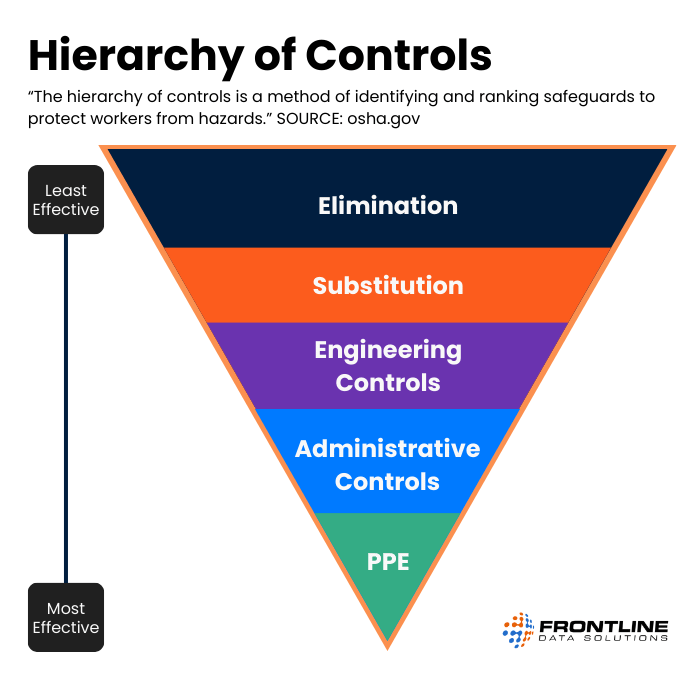
Engineering controls reduce combustible dust hazards at the source. These controls are often more reliable than administrative measures because they minimize reliance on human behavior alone.
Dust collection systems capture airborne dust before it accumulates throughout the facility. These include proper hood placement, adequate airflow, and routine inspection programs (to name a few). Be careful, though. Dust collectors themselves can create explosion risks if you don’t design or manage them properly.
General ventilation is another engineering control that helps dilute airborne dust concentrations and maintain safer work environments. Continuously check airflow patterns, ventilation balance, filter performance, and exhaust effectiveness to keep these controls effective.
Explosion venting systems relieve pressure during a dust explosion and reduce structural damage. These systems direct pressure away from workers and occupied areas. On the other hand, explosion isolation systems prevent flames and pressure from spreading between connected equipment. Common isolation methods include chemical suppression systems, isolation valves, and flame arrestors.
Lastly, don’t forget about spark detection systems which identify ignition sources before they reach combustible dust collection systems or processing equipment. These systems frequently activate automatic suppression mechanisms.
Administrative Controls and Safe Work Practices
Administrative controls establish procedures and expectations that reduce combustible dust risks.
Dust hazard analyses are necessary to evaluate existing hazard and process changes. But they’re also helpful in gauging the effectiveness of controls and to find new operational risks.
Part of this is having effective inspection programs that allow your team to find dust accumulation, ventilation issues, and other problems that might cause an incident. With inspections, corrective and preventive action is key to protect workers. Whoever does the inspection should document their findings and the work they do to control the hazards they find. Inspection findings should lead to corrective actions rather than remaining undocumented observations.
Another important administrative control is having a hot work permit program. This requires careful planning and oversight for hot work near combustible dust hazards. Permits ensure that employees:
- Assess hazards beforehand
- Isolate combustible materials
- Monitor ignition sources
- Maintain fire watch coverage
Alongside hot work programs, it’s critical to have a good equipment maintenance program in place. The last thing you want is for your ventilation system to fail during the middle of a major project. Develop a maintenance schedule for things like bearings, alignment checks, and motor temperature monitoring to prevent failures.
Perhaps the most important type of administrative control, especially in high-risk industries, is a management of change (MOC) process. MOC prevents new changes from introducing new combustible dust hazards unintentionally.
With MOC, you can evaluate the risks of changes before implementing them. This goes for new equipment, process modifications, facility expansions, or even changes to the materials within a process.
The Importance of Incident Investigations and Near Miss Reporting
Many combustible dust incidents provide warning signs before catastrophic events occur. Small fires, smoldering materials, equipment overheating, or minor dust ignitions often indicate larger systemic problems.
Investigate near misses, small fires, dust collector events, etc., to identify root causes. Some of the most common root causes include inadequate control procedures, poor maintenance, and insufficient training.
Corrective actions for any incidents should address systemic issues to prevent recurrence. Safety software like Frontline ACT helps by standardizing reporting an documentation processes. That way, it’s easier to track corrective actions, build status reports, and find patterns across sites and departments. This visibility strengthens combustible dust prevention efforts over time.
Frequently Asked Questions About Combustible Dust Training
How Frontline LMS Improves Combustible Dust Safety Training
Combustible dust hazards require ongoing education, reinforcement, and accountability. Paper-based training systems and manual spreadsheets often make it difficult to maintain consistent compliance across facilities, departments, contractors, and changing workforce conditions.
A learning management system like Frontline LMS standardizes training while improving visibility into workforce readiness and compliance performance.
With a learning management system, you can:
- Assign combustible dust training based on job role or department
- Deliver standardized training content across all facilities
- Track employee and contractor training completion in real time
- Automate reminders for refresher training and recertification
- Store digital records for OSHA compliance inspections and audits
- Monitor overdue training requirements through centralized dashboards
- Improve onboarding consistency for new employees
- Reinforce knowledge retention through recurring training assignments
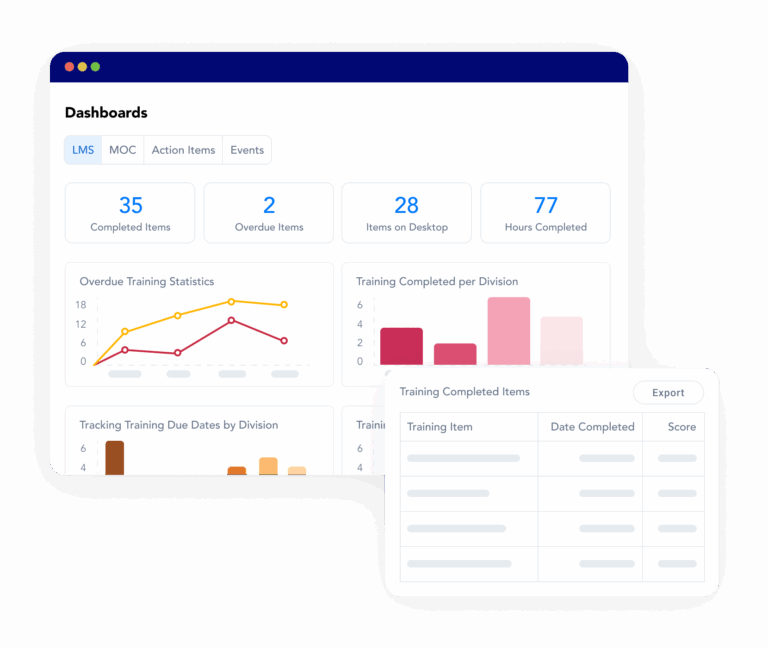
One of the biggest advantages of digital training management is visibility. Safety managers can quickly identify workers with expired or incomplete training before compliance gaps contribute to operational risk.
Frontline LMS also supports stronger contractor management by helping verify training completion before contractors begin work onsite. This becomes especially important during maintenance shutdowns, hot work activities, or large-scale operational projects where combustible dust hazards may increase.
Training consistency is another major benefit. Facilities operating across multiple locations often struggle with inconsistent instruction, outdated materials, or incomplete records. An LMS provides workers with the same high-quality combustible dust safety training regardless of location.
When you integrate learning management systems into a broader EHS strategy, you can improve:
- Regulatory compliance
- Audit readiness
- Incident prevention
- Workforce accountability
- Safety culture development
- Operational efficiency
Combustible dust incidents often happen when workers no longer recognize conditions as dangerous. Ongoing training, reinforcement, and visibility helps maintain awareness before small issues escalate into catastrophic events.
Companies that combine combustible dust safety training with proactive inspections, housekeeping programs, engineering controls, corrective action management, and digital oversight create stronger long-term protection for workers, facilities, and operations.
Want to improve your combustible dust program? Book a demo with our sales team to learn about the benefits of digital safety software.