

Written By:
Monica Kinsey
Monica is a former warehouse operations manager with 7 years of experience in process safety and workplace operations. She has a BS in Logistics, Materials, & Supply Chain Management.
No employer wants to hear that an OSHA Inspector is at their front door, likely looking into potential OSHA infractions. While there are many different reasons why an inspector may visit a workplace, what they’re looking for never changes.
OSHA publishes a list of top violations every year, and its website shows you the top issues in your industry. The most recent list is led by fall protection, hazard communication, and lockout/tagout. In this guide, I’ll explain what OSHA infractions are and give examples on how to avoid the most common ones.
The top 10 OSHA infractions
| Rank | Standard | Applies to | Covered in this post |
| 1 | Fall protection, 1926.501 | Construction | Fall protection section |
| 2 | Hazard communication, 1910.1200 | General industry | HazCom section |
| 3 | Lockout/tagout, 1910.147 | General industry | Lockout/tagout section (new) |
| 4 | Scaffolding, 1926.451 | Construction | Not covered |
| 5 | Ladders, 1926.1053 | Construction | Not covered |
| 6 | Respiratory protection, 1910.134 | General industry | Respiratory protection section |
| 7 | Powered industrial trucks, 1910.178 | General industry | See warehouse safety hazards |
| 8 | Fall protection training, 1926.503 | Construction | Fall protection section |
| 9 | Eye and face protection, 1926.102 | Construction | Not covered |
| 10 | Machine guarding, 1910.212 | General industry | See manufacturing hazards |
Free checklist!
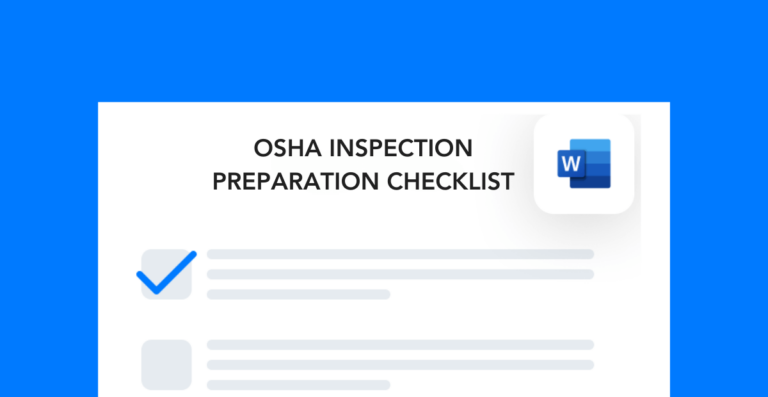
Use this simple checklist to ensure you’re ready for the next inspection. Proper use of this checklist helps you avoid common OSHA infractions.
What Are OSHA Infractions?
OSHA infractions are what an inspector finds and cites. They violate of workplace safety and health standards. OSHA’s terms are “violation” and “citation,” but “infraction” is the word most employers search for. Each citation is classified by its seriousness, and that classification determines the penalty price. The table shows OSHA’s 2026 max penalty amounts:
| Violation type | What it means | 2026 penalty |
| Other-than-serious | Relates to safety or health but isn’t likely to seriously harm | Up to $16,550 per violation |
| Serious | Probability of death or serious physical harm, and the employer knew or should have known | Up to $16,550 per violation |
| Willful | Intentional disregard of the law or plain indifference to employee safety | $11,823 minimum, up to $165,514 per violation |
| Repeat | Same or a substantially similar violation found again within a look-back period | Up to $165,514 per violation |
| Failure to abate | Hazard not corrected by the abatement date | Up to $16,550 per day, generally limited to 30 days |
| De minimis | Technical violation with no direct safety or health effect | No penalty and no citation |
Fall protection infractions
In the construction industry, employers with workers performing tasks at 6 feet or higher fall under OSHA’s fall protection standard. In the general industry category, this height minimum is 4 feet.
Here are two of the major fall protection requirements you must meet:
- Written fall protection program: To avoid a citation for this, I’d recommend having a qualified “competent person” to write out your site’s program (or at least advise you in the development process).
- Compliant fall protection equipment: Implement an equipment inspection process that ensures your harnesses are in good condition. You’ll also want to take a regular equipment inventory to make sure you have enough to go around and meet OSHA’s requirements.
Fall protection has held the most-cited spot for years, and training failures are a separate citation. For training, workers must be trained to recognize fall hazards and use equipment correctly.
Hazard communication (HazCom) infractions
The hazard communication standard is for hazardous chemicals in the workplace. There are many ways for an employer to be out of compliance with these standards. A compliant program has four parts: a written plan, labeled containers, accessible safety data sheets, and worker training.
One of the more common ways is to have a general hazard communication plan that is not specific to your business. If your plan does not go into detail about the chemicals used in your workplace, then you will not be compliant.
To achieve compliance, list out where you store each of the hazardous chemicals in your operations. Additionally, make sure you include the locations of all your safety data sheets (SDS). For more guidance on implementing a compliant SDS process, check out our full SDS process implementation guide.
Another major component of HazCom compliance is ensuring that all your workers have training. Any workers who use, or could potentially be exposed to, hazardous chemicals must have appropriate training. Employers are often cited because they are not able to provide proof of standard-compliant training.
My biggest recommendation here is to document everything. This means recording:
- Training classes held onsite, including who attended
- Past-due training and the reason for the delay
- HazCom refresher courses, scheduled and completed
Lockout/Tagout Infractions
Lockout/tagout, also called “control of hazardous energy,” is third most-cited on the list.
To avoid infractions, keep machines from starting up or releasing stored energy while someone services them. Employers are usually cited for missing machine-specific procedures, no annual inspection of those procedures, and workers who were never trained.
To avoid citation, write a procedure for each machine, train authorized and affected employees, and inspect your procedures at least once a year. For a full walkthrough, read our guide on lockout/tagout procedures.
Respiratory protection infractions
Respiratory protection ranks sixth on the most-cited list. This standard is multi-faceted. There are many things that could cause an employer to get cited for respiratory protection. You must complete hazard assessments if you’re going to expose employees to respiratory hazards.
If a hazard assessment determines that your employees need respiratory protection, then you need to have a written respiratory protection plan. Employees who wear respirators must be medically cleared to do so by a licensed healthcare provider and have an annual fit test.
How to Avoid OSHA Infractions
- Know which standards apply. Start with the standards on the top-10 table that match your industry, then check your state’s rules.
- Inspect on a schedule. Regular inspections catch hazards before an inspector does. Run them in safety inspection software so findings are logged.
- Train and keep proof. Training only counts if you can show who attended and when.
- Fix hazards fast and track the fix. Assign an owner and a due date, and use corrective action software so nothing sits open. See our corrective and preventive action plan guide.
- Keep your records current. Injury logs, training records and inspection reports are the first things an inspector asks for.
- Prepare before the inspector arrives. Use the OSHA inspection preparation checklist to confirm your documents are in order.
What to Do In an OSHA Workplace Inspection
Typically, the inspection starts with an opening conference, followed by a walkaround and then a closing conference. There’s not much you can do when the actually inspection starts:
- Be courteous
- Have a person assigned to accompany the inspector
- Have your records ready
If OSHA issues a citation, it will state the standard, the penalty, and a date to fix the hazard. You usually have 15 working days from receipt to contest a citation, so involve your safety lead and legal counsel right away. Fixing the hazard promptly and documenting it matters either way.
Major takeaways about OSHA infractions
One of the biggest ways to protect your company from OSHA citations is to document what you’re doing. The quality of your recordkeeping may determine whether you receive a warning or a fine.
EHS software is a great tool for implementing standard recordkeeping and management of change systems. If your team struggles to keep track of audits, inspections, training logs, and other compliance documents, you should examine your approach and consider switching to an automated system to avoid possible infractions and citations from OSHA.
FAQ
What are OSHA infractions?
OSHA infractions are violations of workplace safety and health standards that an OSHA inspector finds and cites. OSHA’s official terms are violation and citation. Each citation is classified as other-than-serious, serious, willful, repeat or failure to abate, and the classification determines the penalty. De minimis findings carry no penalty and result in a notice rather than a citation.
What are the most common OSHA infractions?
OSHA’s most recent most-cited list is led by fall protection, hazard communication and lockout/tagout. Scaffolding, ladders, respiratory protection, powered industrial trucks, fall protection training, eye and face protection, and machine guarding complete the top ten. Several of these apply to construction only, so check which standards cover your industry and workplace.
How much are OSHA fines in 2026?
OSHA’s 2026 maximum is $16,550 per serious or other-than-serious violation and $165,514 per willful or repeat violation. Willful violations carry a minimum of $11,823. Failure to abate can cost up to $16,550 per day beyond the abatement date. Actual penalties depend on the violation’s severity, the employer’s size and history, and good-faith efforts.
How do you avoid OSHA infractions?
Know which standards apply to you, inspect your workplace on a schedule, train workers and keep proof of it, and fix hazards quickly with a named owner and due date. Keep injury logs, training records and inspection reports current, and use a checklist to prepare for an inspection. Good documentation is often what separates a warning from a fine.
What is the difference between a serious and a willful violation?
A serious violation is one where there is a substantial probability of death or serious physical harm and the employer knew or should have known about the hazard. A willful violation involves intentional disregard of the law or plain indifference to employee safety. Willful violations carry far higher penalties, with a 2026 maximum of $165,514 and a minimum of $11,823.
How long do you have to contest an OSHA citation?
Employers generally have 15 working days from receiving a citation to file a notice of contest. Missing that deadline typically makes the citation a final order. Contact your safety lead and legal counsel right away, since an informal conference with OSHA may also be available, and keep documenting abatement steps while you decide.