
Written By:
Tiffany Gurary
Tiffany is an EHS professional with 15 years of experience supporting chemical manufacturing, research and development, pilot operations, and multi-site industrial environments.
Managing EHS across one facility is already difficult. Then try running it across five, ten, or fifty. Each site comes with its own regulatory requirements and team culture.
You can’t always run the same software for multi-site ops that you would for a single site. That software might break down at scale if reporting doesn’t roll up or rolling out module by module to a newly acquired plant takes months.
Our shortlist: For manufacturers and industrial teams managing multiple locations, check out Frontline Data Solutions, VelocityEHS, Intelex, Cority, Enablon, Sphera, Benchmark Gensuite, Octave Reliance, SafetyCulture (aka Mitti), and EASE. Weigh your options to find the right pick for your company size, PSM standards, and preferred features. Our guide walks through all of that.
What makes multi-site EHS software buying different?
If you’re buying for a single site, the process is pretty straightforward. You ask one big question: “Does this software do what I need?” If you’re buying for multiple sites, then you have to worry about a second factor: scale. You can measure that a few different ways:
- Standardization vs. local pains. It would be nice to use one incident form or MOC workflow for everything, but a chemical plant and a regional distribution yard have different regulations to worry about.
- Reporting that rolls up. Ideally, your EHS software tool should give leadership a clear cross-site report without manually working through multiple spreadsheets.
- Uneven rollout speed. A platform that takes months of startup time per site won’t keep up if you acquire new sites frequently.
- Paying for what you need. A 40-person office doesn’t need the same modules as a 500-person manufacturing site, but most platforms price and package as if that’s the case.
What to look for in EHS software for multi-site operations
Here are 7 factors you should consider when you think about which vendor to use:
- Customizable and templated workflows. One platform should let you customize your workflows and templates but also keep site information connected.
- Cross-site reports. Being able to see how the software is working across multiple sites in one view saves time and money. It also helps you track trends in incidents, audits, training, and more in a simple view to give leadership.
- Role- and site-based permissions. Who needs access will vary by site. Contractors, supervisors, and corporate EHS need different visibility.
- Mobile app. Multi-site usually means some sites will need access on the floor. The mobile app has to be efficient, otherwise adoption drops off outside offices.
- A native MOC module. If any of your sites are PSM-covered, corrective actions and change requests need to link to each other and trigger as part of the MOC process.
- Module-specific and per-module pricing. Can you buy what you need for each site without all the extra trappings? Full-suite-only pricing penalizes companies that have sites with different needs.
- Time to ROI. Ask how fast it takes for an initial go-live date, then ask how long it takes to onboard a new site.
10 EHS platform cheatsheet
| Platform | Best for | Pricing model | Native MOC module | Multi-site fit |
| Frontline Data Solutions | Mid-size multi-site manufacturers, oil & gas, and chemical operators needing PSM-grade MOC + corrective action they can buy by the module | By module and seats. Use the Frontline pricing calculator to estimate costs. | Yes (integrates with ACT) | Strong — built for per-site and per-module rollout |
| VelocityEHS | Enterprises standardizing EHS+ESG under one global platform | Custom. Need a quote. Full platform pricing. | Broader safety management suite | Strong, but built for enterprise budgets and timelines |
| Intelex | Enterprise EHSQ programs needing customizability across many sites | Custom. Need a quote | Yes, part of an EHSQ suite | Strong — built for enterprise |
| Cority | Complex multi-site EHSQ teams, particularly in regulated manufacturing | Custom. Need a quote | Yes, part of an EHSQ suite | Strong, enterprise built |
| Enablon (Wolters Kluwer) | Global companies who have EHS and ESG reporting partner closely | Custom. Need a quote | Yes, as part of a bigger platform | Strong for ESG focus |
| Sphera | Chemical & PSM companies with global compliance standards | Custom. Need a quote | Yes (dedicated MOC feature) | Strong |
| Benchmark Gensuite | Enterprise companies with many sites | Custom. Need a quote | Yes, as part of an EHS suite | Strong |
| Octave Reliance | Manufacturers who want EHS folded in a QMS tool | Custom. Need a quote | Not a standalone module | Okay, but better fit if quality and safety are managed together |
| SafetyCulture (Mitti) | Frontline-heavy teams that mostly use a mobile app | Per-seat: ~$24–$29/user/mo (Premium), custom Enterprise | No native MOC module | Good for inspections at scale; less fit for formal change management and multi-tier approval workflows |
| EASE | Manufacturers who have to do safety audits on multiple sites | Not publicly stated | No. Audit and inspection platform | Strong specifically for multi-site auditing but not incident or MOC |
The Best EHS platforms for multi-site companies
Frontline Data Solutions
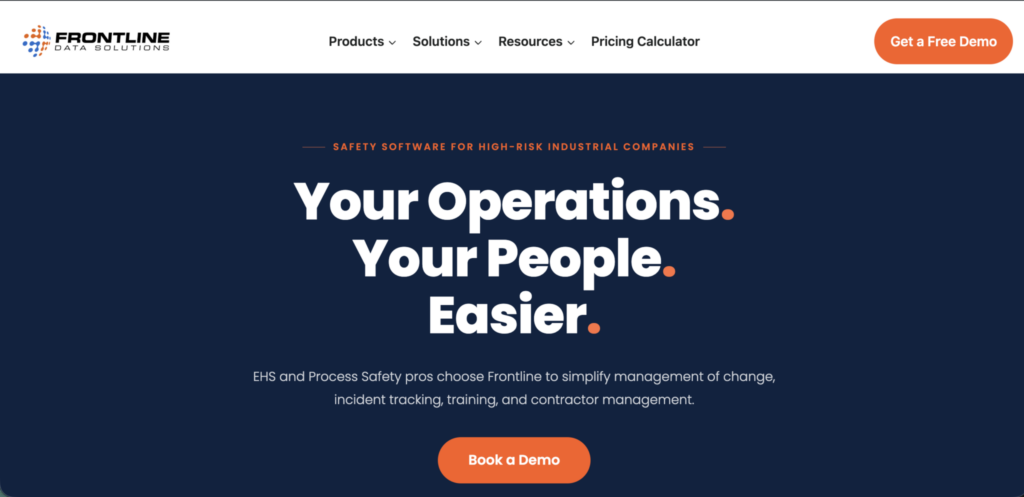
Frontline knows most multi-site companies are paying for software suites they don’t need. Frontline’s a-la-carte pricing model lets you buy just MOC and corrective action tracking at a new plant, then add training or contractor management later. PSM-covered facilities (chemical, energy, oil & gas, refining) often buy Frontline’s MOC and ACT modules together, since a change request and a follow-up can be in the same software.
One example of a multi-site customer is AmSty, which rolled out its EHS training program to multiple plant locations. It makes sense why so many companies are able to prove out a multi-site impact: EHS software averages a 239% five-year ROI.
VelocityEHS
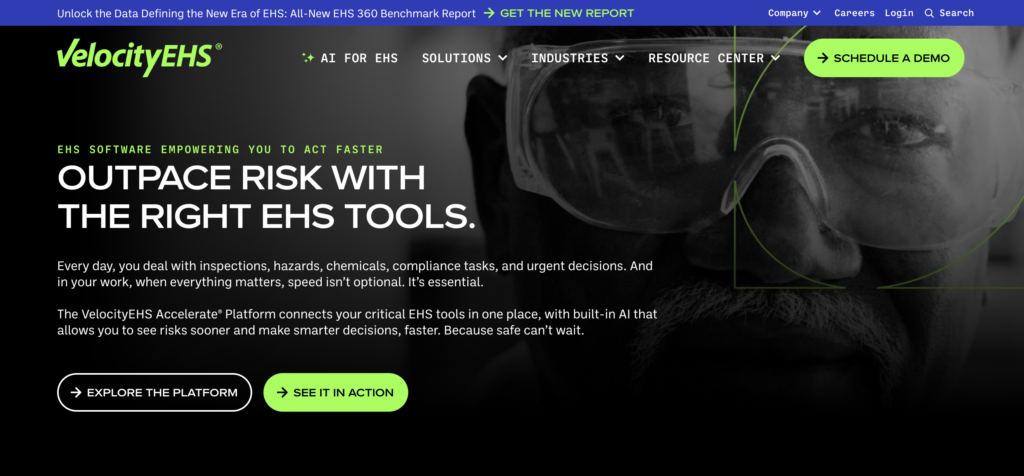
VelcityEHS is well-established in the space for combining EHS and ESG tracking in one platform. Velocity is a good fit for enterprise-level companies that want a single platform and have the budget and implementation timeline. Be aware that, as with the other large companies below, pricing is custom and implementations tend to run longer than a modular, site-by-site rollout — it takes time to see ROI.
Intelex
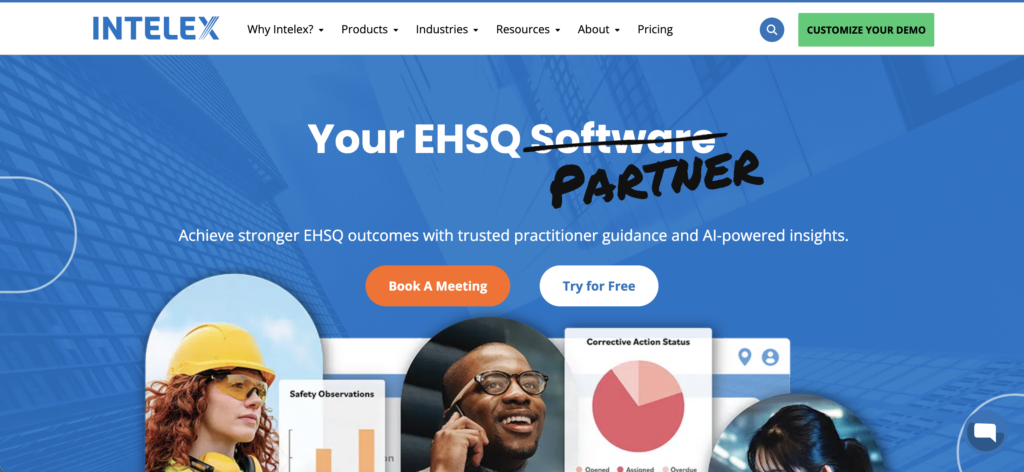
Intelex is best for enterprises, and it’s an EHSQ suite known for customizability. Large manufacturers who invest heavily in their EHS programs and dedicated system admins get the best mileage from Intelex. For the benefit of Intelex’s customizability, it adds implementation complexity and slows rollout.
Cority
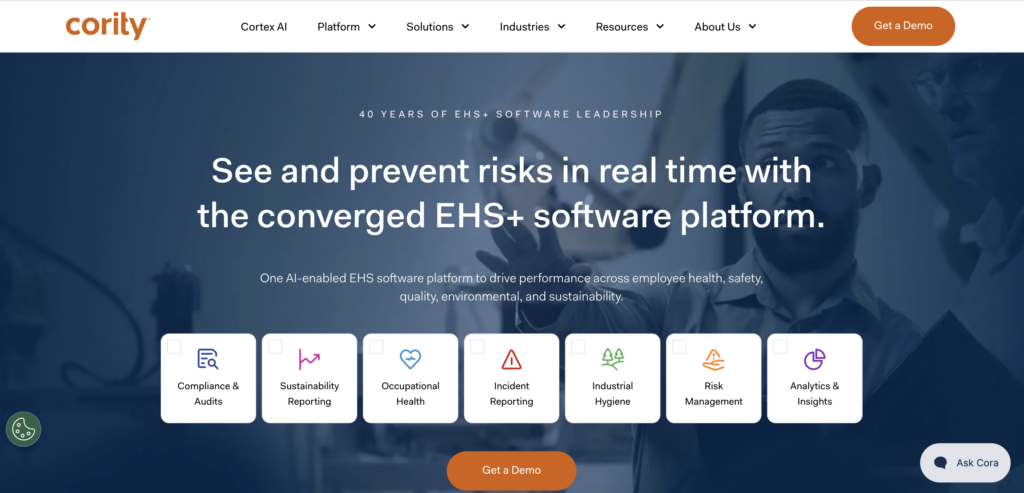
Cority is another popular EHSQ choice, especially in regulated manufacturing companies. Cority has all the bells and whistles, but remember it’sbuilt and priced for enterprises, so small multi-site companies will buy more than they bargain for.
Enablon (Wolters Kluwer)
Enablon’s a good fit for multinational organizations that need sustainability and ESG with their safety and compliance. Since Enablon is based in Europe and has NA headquarters, they’re comfortable with global companies and international clients. The ESG factor attracts buyers, but it’s not required for teams who just want EHS.
Sphera
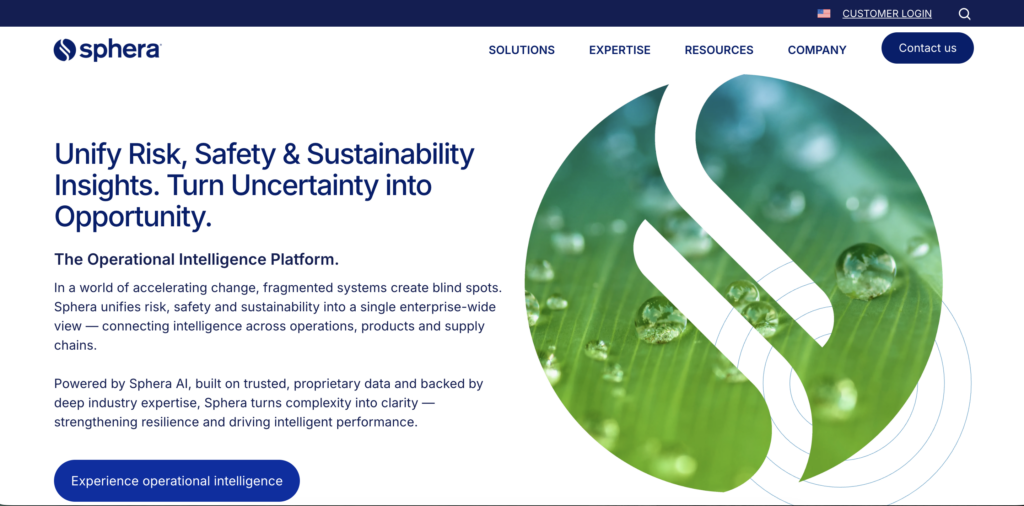
Sphera’s known for chemical safety and ESG compliance. It has an MOC-specific offering that’s a draw for chemical-sector multi-site companies. But, like other large software companies, it’s priced for enterprise-level clients.
Benchmark Gensuite
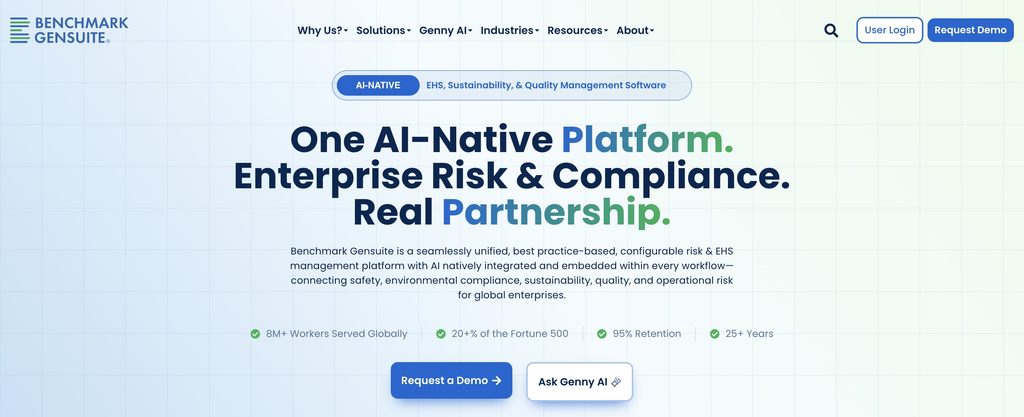
Benchmark Gensuite’s big appeal in 2026 has been its AI-powered EHS capabilities. It’s also known for good customizable reports, especially in the new regulatory areas like PFAS and water-use. However, the reporting is going to be useful mostly for large-scale, complex regulatory programs across several sites.
Octave Reliance
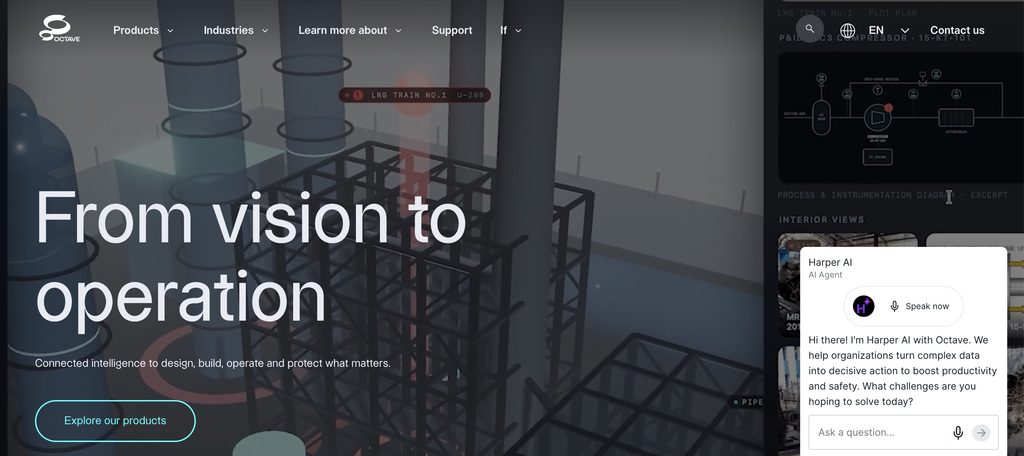
Octave Reliance has health and safety software that fits some of the bill: job safety analysis, behavior-based safety, incident/accident reporting, and SDS management. Octave Reliance is largely known for their QMS platform with CAPA capabilities. If you’re looking for safety and quality managed in one system, this is a good pick, but know Octave’s own product pages don’t describe a dedicated MOC module the way other groups on this list do.
SafetyCulture (rebranded Mitti in August 2026)
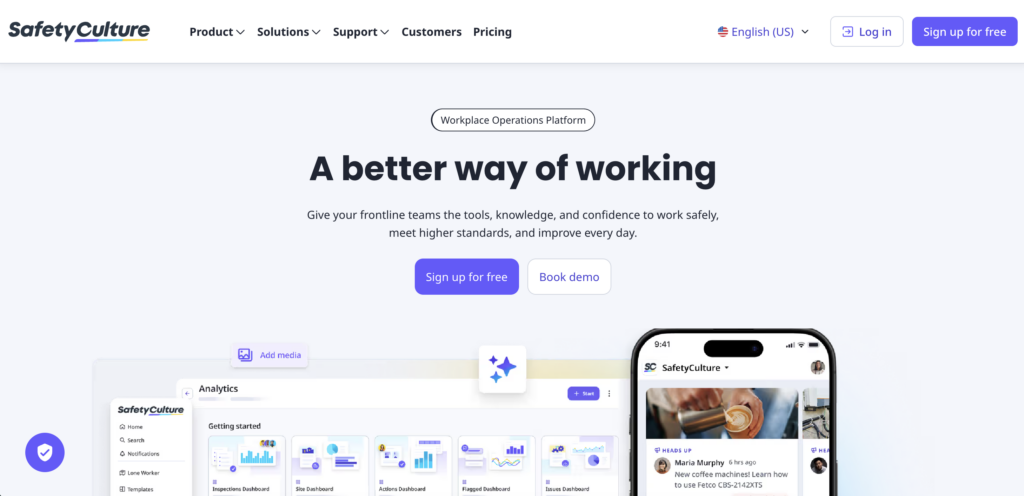
Best known for its mobile-first inspection and checklist experience and a massive public template library (100,000+ templates). It has expanded into quality, maintenance, training, and asset tracking, but its core strength remains field inspections rather than a full EHS system of record. Trade-off: per-seat pricing (roughly $24–$29/user/month on its Premium tier) scales quickly across a large multi-site workforce, and independent reviews note limited multi-tier approval workflows and no native MOC module — worth weighing against a plant with formal change-management requirements.
EASE
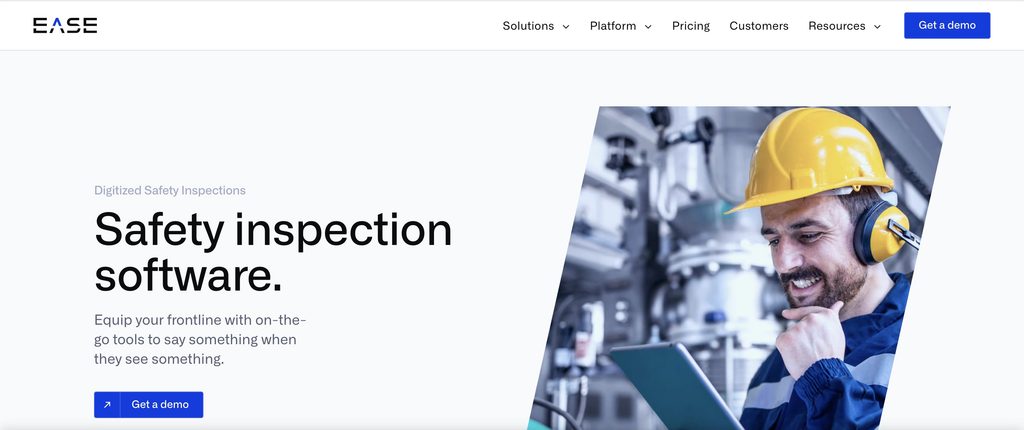
EASE is purpose-built for layered process audits (LPA), 5S, Gemba walks, and custom quality/safety audits, with real multi-site strength — dashboards are built to show performance “across your lines, shifts, and sites.” Trade-off: it’s an audit and inspection platform, not a full EHS suite — there’s no incident management, training/LMS, MOC, or contractor management built in, so most multi-site operators would pair it with (or choose instead) a broader system for those functions.
How to choose the right EHS software for your multi-site team
Of course, the right choice is going to depend on your team’s specific needs; that’s why so many choices exist. Base your choice on our list of criteria:
- How many of your sites carry PSM obligations
- How evenly sized your locations are
- How much you’re willing to spend
- What features you do and don’t need
- Whether you’ll add more sites to your operations
If Frontline matches your needs for MOC and CAPA working together (while giving you the freedom to pay per module), give Frontline a closer look. Frontline can get a new site configured, migrated, and live without a months-long timeline and with pricing that covers just the modules you need.
Frequently asked questions
What is the best EHS software for multi-site operations?
There’s no single answer. It depends on:
- How many of your sites carry PSM obligations
- How evenly sized your locations are
- How much you’re willing to spend
- What features you do and don’t need
- Whether you’ll add more sites to your operations
Frontline Data Solutions is built specifically for MOC/CAPA closure. Global enterprises with bigger budgets and longer go-live timelines might prefer VelocityEHS, Intelex, Cority, Enablon, or Sphera instead — but that’s if they’re willing to wait to see ROI.
What should a safety manager look for when buying EHS software for a multi-site company?
They should look for these 7 things:
- Customizable and templated workflows
- Cross-site reports
- Role- and site-based permissions
- Mobile app
- A native MOC module
- Module-specific and per-module pricing
- Time to ROI
Is it better to buy one all-in-one EHS platform, or pay for modules site by site?
It depends on how you plan to roll out the platform to your sites. A company with consistent operations across their sites might benefit from a full-suite platform applied everywhere. A company with growth, like adding sites through acquisition, or with some locations needing only incident tracking while others need the full suite, will fare better with per-module pricing.
Do multi-site EHS platforms need a built-in MOC module?
If any of your sites fall under OSHA’s PSM, yes. A change request that isn’t linked to action tracking causes gaps. Platforms like Frontline, Sphera, Intelex, and Cority have this connection, and audit-focused tools like EASE and inspection-first tools like SafetyCulture don’t necessarily include it out the gate.
How much does EHS software cost for a multi-site company?
Most enterprise platforms in this category (VelocityEHS, Intelex, Cority, Enablon, Sphera, Benchmark Gensuite) use custom pricing — you have to ask for a quote. SafetyCulture prices per seat (about $24–$29/month on Premium when we checked). Frontline prices by module and has a pricing calculator so you can better gauge cost.