
Written By:
Monica Kinsey
Monica is a former warehouse operations manager with 7 years of experience in process safety and workplace operations. She has a BS in Logistics, Materials, & Supply Chain Management.
(Editor’s note: This post was updated Oct 5, 2026 to include an overview of common hazards and assessment criteria.)
Warehouse safety hazards often reoccur, so it’s essential to implement a structured approach address them.
Most injuries come from a short list: forklifts, falls, racking, machinery, manual handling, fire and chemicals. This guide shows how to identify each hazard, fix it with the right control, and keep it from coming back. You get a hazard-by-hazard table, a four-step process (assess, fix, document, replicate), and the metrics that show whether your process is working.
Free Checklist!
Conduct a thorough warehouse audit with this checklist. Customize the line items for an even more site-specific resource.

Common Warehouse Safety Hazards at a Glance
Most warehouse injuries come from eight common hazards. This table shows how each one injures workers, the first control to put in place, and the OSHA standard that applies. Having worked in an Amazon warehouse myself, I can vouch for the importance of process for these common eight: address these, and you’ll knock out most common injuries.
| Hazard | How it injures | First control | OSHA reference |
| Powered industrial trucks (forklifts) | Struck passersby, tip-overs, falling loads | Separate pedestrian and truck routes, run daily pre-use inspection | 29 CFR 1910.178 |
| Slips, trips and falls | Spills, clutter, damaged floors, dock edges | Clean as you go and mark walkways; see how to maintain a clean warehouse | 1910 Subpart D |
| Racking and falling objects | Racks collapse or objects fall | Post load limits, inspect for damage, add rack protection | 1910.176; no specific rack standard here |
| Machinery and conveyors | Caught-in, struck-by, amputations | Guarding and lockout/tagout procedures | 1910.147, 1910.212 |
| Manual handling and ergonomics | Back and shoulder injuries | Mechanical aids, team lifts, store heavy items at waist height | General Duty Clause |
| Fire and blocked exits | Burns, smoke inhalation, no escape route | Keep exits and extinguishers clear; maintain storage clearance | 1910.36-.38, 1910.157 |
| Hazardous chemicals | Burns, inhalation, eye injuries | Labels, safety data sheets, training | 1910.1200 (HazCom) |
| Forklift exhaust and battery charging | Carbon monoxide exposure, acid burns, hydrogen ignition | Ventilate, use PPE, keep eyewash near charging area | 1910.178(g), 1910.151(c), 1910.1000 |
Workhouse safety hazards one-by-one
Forklift safety hazards
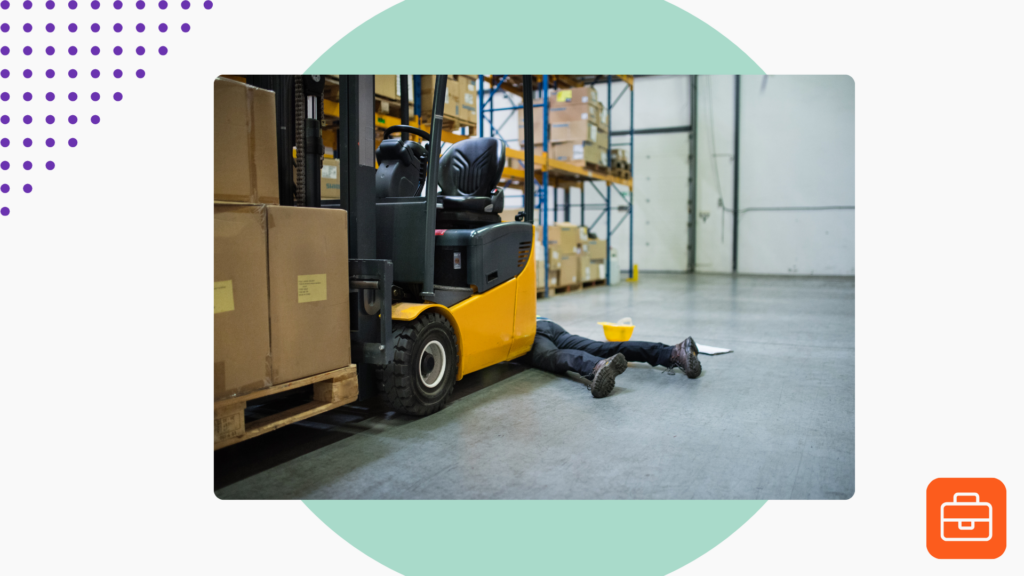
Forklift hazards include pedestrian strikes, tip-overs, falling loads and speeding in aisles. You can control them with marked pedestrian routes, three-year operator evaluations, daily inspection, speed limits, and horns at blind corners.
Slip, trip and fall hazards in warehouses
Spills, loose pallet wrap, cords, and uneven floors cause falls. Mark walkways, fix leaks at the source, keep aisles clear, and make cleanup the finder’s job. Guard dock edges and use proper ladders instead of climbing racks.
Racking and falling object hazards
Racks fail when they’re overloaded, hit by trucks, or damaged. Post a load capacity, require a report and tag-out of any damaged upright, install column protectors, and schedule inspections by a trained person.
Machinery and conveyor hazards
Workers are hurt while clearing jams or servicing equipment that is still energized. Guard moving parts, write machine-specific lockout procedures, and train authorized employees. Audit procedures at least annually.
Manual handling and ergonomic hazards
Repetitive movement causes strains that sideline workers for weeks. Move heavy items to waist height, supply carts, lift tables and hoists, and rotate tasks to limit repetition.
Fire hazards in warehouses
Dense combustible storage, blocked exits, and charging areas raise fire risk. Keep exit routes unobstructed, maintain clearance below sprinklers, test extinguishers on schedule, and run drills on every shift.
Hazardous chemical hazards in warehouses
Damaged containers and mixed storage release fumes or burns. Label every container, keep safety data sheets accessible, store incompatibles apart, and train workers on spill response.
Forklift exhaust and battery charging hazards
Propane and diesel trucks emit carbon monoxide; charging lead-acid batteries releases hydrogen and uses acid. Ventilate the area, ban ignition sources, provide eyewash and PPE, and train charging staff.
OSHA enforcements for warehouses in 2026
OSHA’s National Emphasis Program on warehousing and distribution centers has been extended, which means inspectors keep looking at forklifts, material handling, walking-working surfaces and heat.
Three of OSHA’s ten most-cited standards in 2026 apply to warehouses: hazard communication (1,961 citations), lockout/tagout (1,863) and powered industrial trucks (1,379).
Step 1: Run Routine Hazard Assessments
Regular hazard assessments are crucial for identifying and controlling workplace risks. These evaluations should encompass various aspects of the warehouse environment, including:
- Personal protective equipment (PPE)
- 5S workplace organization
- Specific operational processes
- Heavy machinery, equipment, and tools
- Walkways and overall building layout
Use our warehouse audit checklist to walk each area the same way every time.
Running these assessments routinely helps you detect hazards early, reducing safety impact. Rotating the focus of assessments across different areas or equipment ensures comprehensive coverage and helps identify persistent issues that may require more in-depth analysis.
Pro Tip: Simplify and streamline your assessments with a Mobile EHS App that allows your team to capture and track issues in real time, directly from the field.
What to assess
- Loading docks: trailer restraints, dock plates, wheels chocks and lighting, edge protection.
- Battery charging areas: eyewash, PPE, ventilation, spill containment and ignition source control.
- Racking: upright damage, beam connections, load signage and column protection.
How often to assess
| Area | Suggested frequency | Owner |
| Forklifts and other trucks | Daily at minimum; before each shift if possible | Operator |
| Aisles, floors and walkways | Daily | Shift supervisor |
| Racking and storage | Weekly visual; periodic detailed inspection | Warehouse lead; qualified inspector |
| Dock doors, plates and restraints | Weekly | Dock supervisor |
| Battery charging area | Weekly | Maintenance |
| Fire exits and extinguishers | Monthly | Safety coordinator |
| Chemical storage and labels | Monthly | Safety coordinator |
| Machine guarding and lockout procedures | At least annually | Maintenance manager |
| Full site audit | Quarterly | Site manager and safety lead |
Run these checks in safety inspection software so your findings become tracked actions that aren’t stuck on paper. A mobile EHS app for hazard reporting lets anyone on the floor flag a hazard.
Step 2: Fix Common Hazards First
Addressing prevalent safety hazards can free up resources to tackle more complex issues. Common warehouse hazards to prioritize include:
- Lockout/tagout procedures
- Powered industrial truck (PIT) accidents
- Slips, trips, and falls
- Moving parts on heavy machinery
- Falling objects
- Repetitive motions leading to strains and sprains
These hazards are widespread across various warehouse settings, and ample research and best practices are available to guide their mitigation.
Decide priority on what gets fixed
Rank hazards by severity (how badly someone could be hurt) and likelihood (how often exposure happens). Fix the highest combined score first, and put a stopgap in place while your team schedules a more permanent fix.
For example: a forklift and pedestrian crossing at a blind corner scores high on severity and likelihood because it can cause a fatality and happens every shift. It goes ahead of an occasional wet spot near a door, even though spills happen more often.
Step 3: Document Your Approach
Many of us don’t document the actions we’ve taken to address hazards. Without detailed records, it’s challenging to determine which strategies are effective. Implementing a workflow that requires logging all hazard-related activities:
- Corrective and preventive actions
- Hazard assessments
- Process improvements
- Equipment changes
- Hazard-specific training
While manual documentation is possible, it’s better to use an action tracking system.
Need help setting up an effective system for resolving safety issues? Explore our Corrective and Preventive Action Plan guide for a proven framework you can apply to any warehouse environment. While manual documentation is possible, many warehouses adopt action tracking systems to streamline this process and maintain organization.
Example of Hazard Documentation with Frontline ACT
Consider the replacement of a worn-out stop sign. Documenting details like the sign’s location, replacement date, and brand used can reveal patterns, such as:
- High-traffic areas needing frequent replacements
- The average lifespan of stop signs
- Materials required for replacements
- Most durable brands
Such information is invaluable, especially if incidents occur in the same area, allowing for a review of maintenance history and contributing factors.
Step 4: Repeat Your Successes
When a safety solution is effective, adapt and apply it to other areas with similar hazards.
Before closing any action, ask:
- Does the same hazard exist in another area, shift, or site?
- Can the fix be copied as is, or does it need adjustment?
- Is the procedure, drawing, or photo saved where other teams can find it?
- Who is responsible for rolling it out, and by when?
- Has the rollout been added to the standard work or inspection checklist?
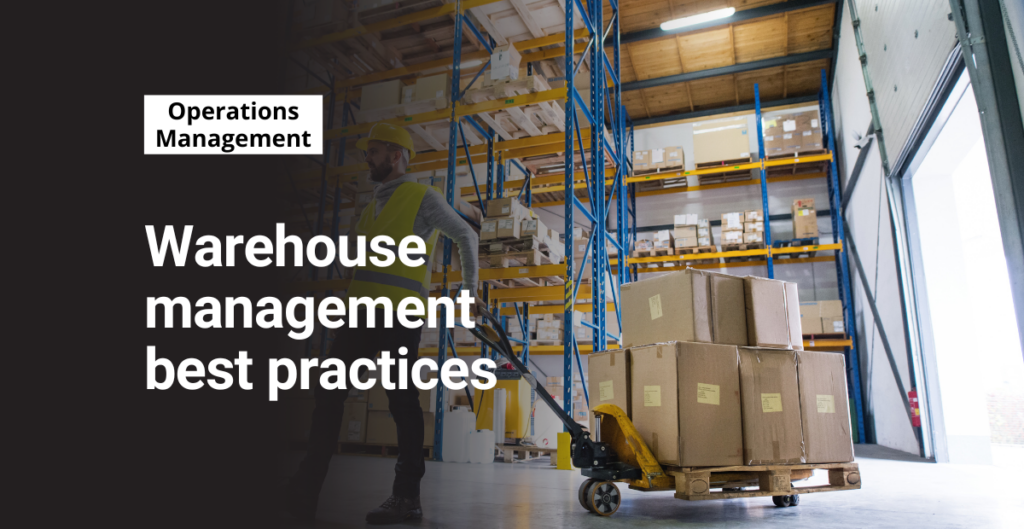
Good replication also depends on consistent routines. See our warehouse management best practices for how to build them.
FAQ
What are the most common hazards in a warehouse?
The most common warehouse hazards are forklift and pedestrian collisions, slips, trips and falls, falling objects from racking, caught-in machinery, manual handling strains, fire and blocked exits, hazardous chemicals, and forklift exhaust or battery charging risks. Several of these match OSHA’s most-cited standards. Start with these eight, then add any site-specific hazards your own walkthrough and incident history turn up.
What is the most dangerous hazard in a warehouse?
Forklifts and other powered industrial trucks are generally the most dangerous, because collisions, tip-overs and pedestrian strikes can be fatal. The National Safety Council counted 84 forklift-related deaths in 2024. [confirm] Falls from height and falling rack loads are also severe. Rank hazards at your own site by severity and likelihood, then fix the highest-risk ones first and add interim controls.
How do you conduct a warehouse hazard assessment?
Walk each area with a checklist, note every condition that could injure someone, and rate each by severity and likelihood. Talk to operators and pickers, review near misses and past incidents, then assign an owner and due date to every finding. Repeat on a set schedule and after any change in layout, equipment or process, and keep records so you can show hazards were closed and spot repeats.
What OSHA standards apply to warehouses?
No single OSHA standard covers warehouses. The main ones are powered industrial trucks (1910.178), walking-working surfaces (Subpart D), exit routes and fire protection (1910.36 to 1910.38, 1910.157), lockout/tagout (1910.147), machine guarding (1910.212), materials storage (1910.176), hazard communication (1910.1200) and emergency eyewash (1910.151(c)). OSHA also uses the General Duty Clause for hazards such as ergonomics. Check state-plan rules too, since some are stricter than federal ones.
How often should you inspect a warehouse for hazards?
It depends on the hazard. Inspect forklifts before each shift or at least daily, aisles and floors daily, racking weekly by visual check with a periodic detailed inspection, and fire equipment monthly. Do a full site audit at least quarterly. These are suggested frequencies rather than OSHA mandates, except where a standard sets one, so confirm requirements for your site and insurer.
What is the hierarchy of controls?
The hierarchy of controls ranks fixes from most to least effective: elimination, substitution, engineering controls, administrative controls, and personal protective equipment. Always try the highest level you can. Eliminating a hazard, such as removing foot traffic from a forklift aisle, works better than asking people to be careful or wear a vest. PPE is the last line of defense, not the first fix.
How do you prevent forklift accidents in a warehouse?
Separate forklifts and pedestrians with barriers and marked crossings, train and evaluate every operator (OSHA requires evaluation at least every three years), and require a pre-use inspection. Enforce speed limits, use horns and mirrors at blind corners, keep loads low and stable, and never allow riders. Add proximity sensors in heavy-traffic areas and review near misses every month with the team.
What should you document after fixing a hazard?
Log the hazard, location, who found it and when, its risk rating, the control chosen, the owner, the due date, closure evidence such as a photo or sign-off, and whether the fix can be replicated elsewhere. Also keep inspection records, training records and the injury logs OSHA requires. Good records prove the hazard was closed and help you spot repeats before someone gets hurt, which is the point of the process.