
Written By:
Monica Kinsey
Monica is a former warehouse operations manager with 7 years of experience in process safety and workplace operations. She has a BS in Logistics, Materials, & Supply Chain Management.
Manufacturing hazards are an unavoidable reality in industrial environments, but they don’t have to result in injuries or downtime. From equipment malfunctions to chemical exposure, these risks can seriously impact worker safety and efficiency.
This guide is for EHS managers, plant managers, and supervisors, and it covers what goes wrong, the OSHA standard behind each hazard, and how to fix it. We go over this with Jason Hathcoat, a Sr. EHS specialist at Trane Technologies.
Free Checklist!
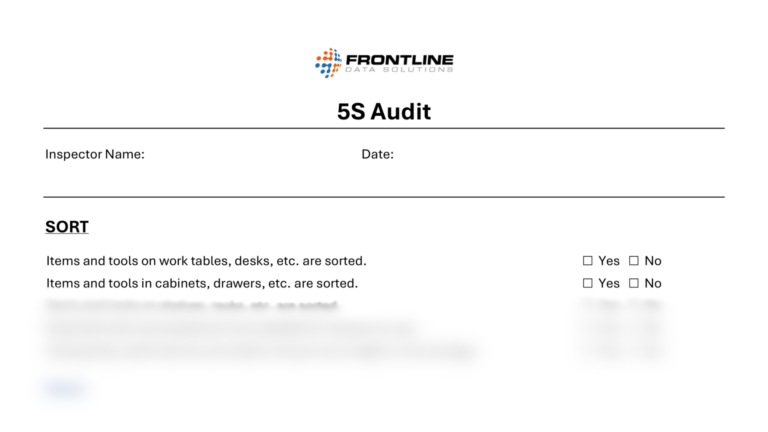
Audit your facility’s 5S and find areas of improvement with this simple audit form.
What Counts as a Manufacturing Hazard?
A manufacturing hazard is anything on the plant floor that can injure a worker, damage equipment, or halt production. A hazard is the source of harm, like an unguarded machine. On the other hand, a risk is the likelihood of harm happening. We find the hazards first, then rank by risk so the most serious ones get fixed first.
Low-hanging fruit vs. deep hazards
In my experience, most manufacturing facilities are crawling with safety hazards. Oftentimes, you’ll find what I like to call the “low-hanging fruit,” which are the little things that can (and will) open the floodgate for inspectors to pick your facility apart.
Low-hanging fruit would be blocked electrical panels, missing or expired fire extinguishers and obstructed eye-wash stations. Deep hazards, such as missing lockout procedures or untracked confined space entries take a program rather than a quick fix to improve. Use the free 5S manufacturing checklist to clear the easy items first.
10 hazards at a glance
| Hazard | OSHA standard | Typical failure | First fix |
|---|---|---|---|
| Electrical | 29 CFR 1910 Subpart S; NFPA 70E for arc flash practices | Untrained workers, untested PPE, no arc flash study | Complete an arc flash study and put PPE on a test schedule |
| Machine guarding and lockout/tagout | 1910.147 (LOTO); 1910.212 (machine guarding) | Missing guards, undocumented procedures | Write machine-specific procedures and post them at the machine |
| Confined space | 1910.146 | Spaces not identified, entries not tracked | Inventory eachconfined space and flag permit-required ones |
| Fire | 29 CFR 1910 Subpart L; 1910.252 (hot work) | Skipped maintenance, poor housekeeping, lapsed extinguisher checks | Set an inspection and maintenance routine with owners |
| Slips, trips, and falls | 1910 Subpart D (walking-working surfaces) | Dismissed as low-level findings | Fix same-level fall sources and guard heights |
| Powered industrial vehicles | 1910.178 | Operators trained but not evaluated or documented | Evaluate every operator and schedule refreshers |
| Hazardous chemicals | 1910.1200 (hazard communication); 1910.134 (respiratory protection) | Unlabeled containers, outdated SDSs, incompatible storage | Audit labels and SDSs, set storage rules |
| Noise | 1910.95 | Exposure not measured, hearing protection not enforced | Measure noise exposure and enroll affected workers in a hearing conservation program |
| Ergonomics and manual handling | No dedicated standard; General Duty Clause | Heavy, repetitive, or awkward tasks unchanged | Identify the highest-strain tasks and redesign the worst ones |
| Struck-by and material handling | 1910.176 (handling materials); 1910.179 (overhead cranes); 1910.133 (eye and face protection) | Unstable loads, uninspected slings and hoists, no eye protection | Inspect lifting equipment and store materials stably |
1. Electrical Hazards
Most companies fail to properly train their employees on electrical shock and arc flash hazards. And they often fail to require their employees to wear proper electrical PPE and are undermanaged. Of the companies that do enforce proper PPE, many are relaxed when inspecting and testing this gear.
OSHA’s electrical requirements are in 29 CFR 1910 Subpart S, and NFPA 70E is the industry standard for safe electrical work practices and arc flash.
Other examples of frequently overlooked manufacturing hazards include:
- Failing to properly inspect electrical equipment
- Not performing arc flash surveys or infrared surveys
- Not teaching employees how to spot signs of electrical hazards
- PPE isn’t tested or inspected on a schedule, so nobody knows whether it still protects
All of this adds up to huge risk and potentially very fatal mistakes on the company’s part. If your employees work with this equipment on a regular basis, it’s your responsibility to ensure its upkeep and to teach them how to safely operate it.
2. Machine guarding and Lockout/Tagout
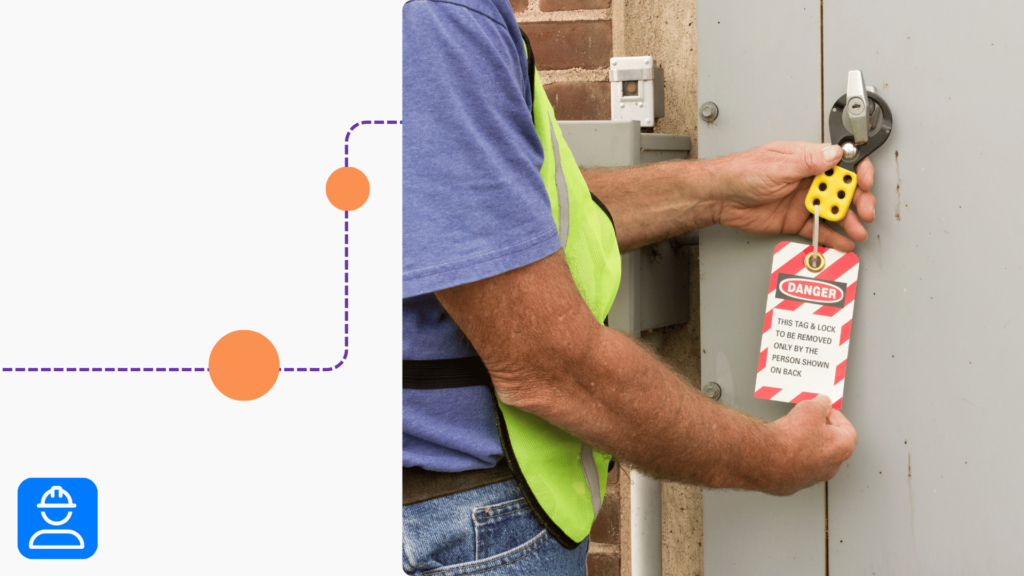
In my 15+ years of experience, I’ve seen too many companies fail to comply with LOTO regulations, resulting in employee injuries. Oftentimes, companies won’t even have documented procedures readily available on the specific machinery for employees to lock out.
Lockout/tagout (29 CFR 1910.147) protects workers from unexpected startup during servicing.
In the past, I’ve asked employees where the LOTO protocol is posted and gotten the response “it’s in my head.” If your employees think this way, it’s because you haven’t fully explained the dangers of lockout/tagout failures.
Dig into the OSHA standard and implement the best practices outlined so you don’t end up with these types of hazards (and resulting injuries) on your hands.
Guarding fails in similar ways. OSHA’s machine guarding standard (1910.212) requires guarding wherever moving parts, such as the point of operation, nip points, and rotating parts, can injure an operator.
3. Confined Space Hazards
The biggest source of manufacturing confined space hazards, in my opinion, is manufacturers often don’t identify confined spaces as such. If you don’t know what a confined space is in the first place, you won’t be able to protect your workers from the hazards that come with it. OSHA’s confined space standard (29 CFR 1910.146) applies in full to permit-required spaces, where atmospheric, engulfment, or entrapment hazards might be fatal.
I’ve also seen several instances where a company identified a confined space and then didn’t perform the proper required training for employees. Or, they perform the training but then don’t monitor who’s working inside. So, they could easily have untrained personnel in the confined space, increasing the risk of an injury or fatality.
Bottom line: you need to ensure that only trained individuals enter confined spaces.
4. Fire Manufacturing Hazards
Fire hazards are presently in most manufacturing environments and often go hand in hand with preventative maintenance procedures. Just think about all the equipment and machinery in a manufacturing facility. OSHA covers fire protection in 29 CFR 1910 Subpart L and hot work in 1910.252.
If you don’t perform routine maintenance, audits, and inspections, you’re greatly increasing the risk of a fire occurring. Once, I saw a fire that happened because the facility failed to maintain its machines per the manufacturer’s recommendations.
Other common environments for fire manufacturing hazards include:
- Defective fire extinguishers (Download this fire extinguisher inspection checklist)
- Poor housekeeping (cable management, corrugate recycling, etc.)
- Lack of proper flammable storage
- Insufficient management of hot work activities
- Uncontained ignition sources
- Neglected fire suppression system (inspection and maintenance)
Because there’s so much equipment in a manufacturing facility, you could list almost an endless number of fire hazards. That’s why having a preventative maintenance program in place will help you reduce your risk exposure.
[Check out our guide “How to Create a Preventive Maintenance Program”]
5. Slips, Trips, and Falls
As an EHS professional, I’m constantly hearing about slips, trips, and falls but when it comes to hazard management, they don’t get the credit they deserve. OSHA’s walking-working surfaces rules in 29 CFR 1910 Subpart D cover floors, stairs, ladders and fall protection.
When they come across trip hazards during site audits, many supervisors shrug them off as a low-level finding. And it’s true that these hazards may not be immediately dangerous to life and/or health.
However, there’s a strong chance that at some point, someone will come through the area, fall, and sustain an injury (or worse). After all, same-level falls accounted for 136 fatalities and 127,680 injuries in 2020, per the National Safety Council.
When we look at falls from height, the risk only increases from there. You must implement proper training, inspection techniques and frequency, and program implementation for these types of hazards. Do your homework and don’t take it lightly.
6. Powered Industrial Vehicles
In 2021, the National Safety Council Reports 70 fatalities and 7,290 non-fatal injuries resulting from forklift incidents. Ensure that you have a robust PIV program in place with proper training. Powered industrial vehicles include forklifts, powered pallet jacks, order pickers and tuggers. OSHA’s standard (29 CFR 1910.178) requires operators to be trained and evaluated.
Also, make sure to have a forklift course for the specific type of lift workers will be learning how to operate. The course should have a classroom component and a hands-on practical component to verify mastery of the concepts. All PIV training courses need to be thoroughly documented (this includes refreshers and retraining).
7. Hazardous Chemicals
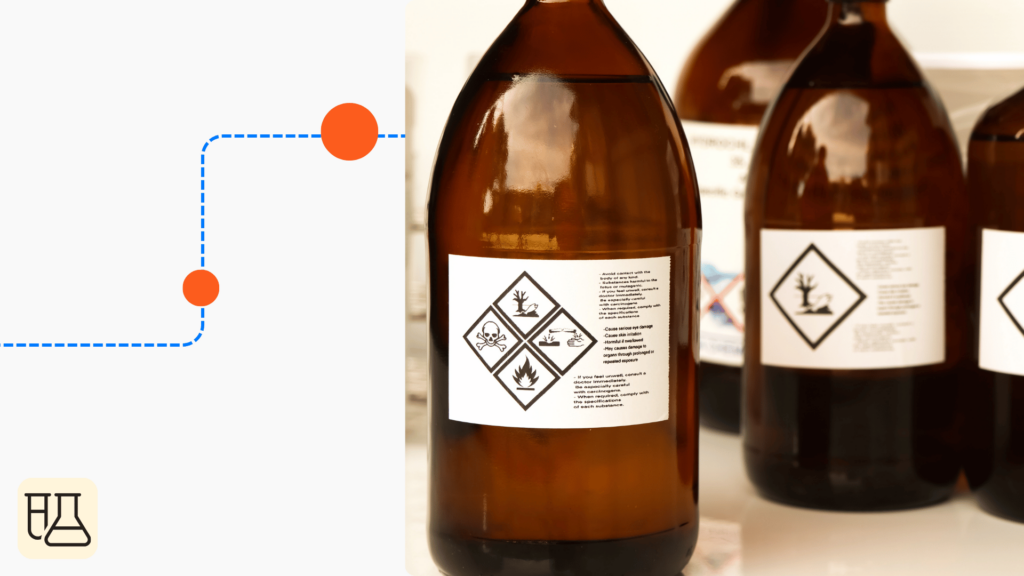
Lots of workers contact hazardous chemicals just because a container wasn’t labelled correctly. OSHA’s Hazard Communication standard (1910.1200) requires labels, safety data sheets and training, and it ranks #2 on OSHA’s FY 2026 Top 10. Respiratory protection (1910.134) ranks #6.
Here are ways mishandled hazardous chemicals creep onto the floor:
- Containers are unlabeled or have outdated labels
- Safety data sheets are missing or out of date
- Incompatible chemicals are stored together, which is how reactive chemical hazards turn into an incident
- Employees aren’t trained on chemicals
- Respirators are issued without a written program
This is why it’s important to keep SDS visible and current, and labels clear.
8. Noise Hazards
It’s an accepted fact that working with heavy machinery comes with hearing loss. But it shouldn’t have to be that way.
Noise hazards are easy to overlook because they’re gradual. OSHA’s occupational noise standard (1910.95) requires a hearing conservation program when employee exposure reaches 85 decibels averaged over an eight-hour shift.
To know where noise exposure is a problem, you have to measure it and see which areas go over 85 decibels. Then, you can provide hearing protection and training for employees.
9. Ergonomics and Manual Handling
Ergonomics is another sneaky one that builds permanent damage over time. OSHA doesn’t have a specific ergonomics standard, but it can cite ergonomic hazards. The National Safety Council counted 492,140 overexertion injuries involving days away from work in 2023 and 2024.
When our workers are doing repetitive jobs that involve heavy lifting, give them breaks or rotations. We redesigned one of our tasks with a lift assist since we noticed repeated strain. We wouldn’t have been able to catch the strain if we hadn’t tried to make reporting easy.
10. Struck-By and Material Handling Hazards
Contact incidents (being struck by objects) were the leading cause of injuries with days away from work across industries in 2023 and 2024, with 499,270 cases, according to the National Safety Council. Struck-by hazards are covered in several OSHA standards, including material handling (1910.176), overhead cranes (1910.179) and eye and face protection (1910.133).
That’s why it’s important to inspect lifting equipment every time you use it, and post rated capacities. Set exclusion zones so people stay out of the way of suspended loads and swing zones.
How to Choose Which Hazards to Fix First
To think about hazard priorities, rank them. Score each one by how severe an injury could be and how likely it is to get an injury. Fix the high-scoring ones first with a chart like this:
| Likely (3) | Medium (3) | High (6) | High (9) |
| Possible (2) | Low (2) | Medium (4) | High (6) |
| Likelihood | Minor (1) | Serious (2) | Severe (3) |
|---|---|---|---|
| Unlikely (1) | Low (1) | Low (2) | Medium (3) |
For example, a guard removed from a running machine is likely and severe, so it scores 9. A scuffed floor marking in a low-traffic aisle is possible and minor, so it scores 2.
Be proactive and find ways to automate the busywork. Spreadsheets work for a few items but lose track at scale. EHS software for manufacturing and safety management software keep corrective actions, owners and due dates in one place, so nothing slips between shifts or sites.
FAQ
What are the most common hazards in manufacturing?
The ten most common manufacturing hazards are electrical hazards, unguarded machinery and uncontrolled energy (lockout/tagout), confined spaces, fire, slips, trips and falls, powered industrial vehicles such as forklifts, hazardous chemicals, noise, ergonomic strain, and struck-by and material handling hazards. Lockout/tagout, powered industrial trucks, machine guarding, hazard communication, respiratory protection and eye and face protection all appear on OSHA’s FY 2026 most-cited list. Each hazard above includes its OSHA standard and a first fix.
What is the leading cause of injuries in manufacturing?
No single cause dominates. Across U.S. industries, the National Safety Council counted 499,270 contact incidents (such as being struck by or caught in equipment), 492,140 overexertion injuries and 479,480 falls, slips and trips involving days away from work in 2023 and 2024. Those three are nearly tied, which is why guarding, lockout/tagout, manual handling and fall prevention all matter.
What is the difference between a hazard and a risk?
A hazard is anything that can cause harm, such as a spinning shaft, a chemical or a wet floor. Risk is the chance that the hazard actually causes harm, combined with how severe the harm would be. A wet floor in a locked storage room is a hazard with low risk. The same wet floor at a busy entrance is a high-risk hazard.
What OSHA standards apply to manufacturing?
Manufacturers fall under OSHA’s general industry standards in 29 CFR Part 1910. The most relevant cover lockout/tagout (1910.147), machine guarding (1910.212), confined spaces (1910.146), powered industrial trucks (1910.178), hazard communication (1910.1200), electrical safety (Subpart S), fire protection (Subpart L), walking-working surfaces (Subpart D), hearing conservation (1910.95) and respiratory protection (1910.134). Plants with highly hazardous chemicals may also fall under process safety management (1910.119).
How often should LOTO procedures be inspected?
OSHA requires each energy control procedure to be inspected at least once a year. An authorized employee other than the one using the procedure performs the inspection, and the employer certifies it with the machine, the date, the employees involved and the inspector’s name. Inspect sooner if equipment changes or you see lockout done incorrectly.
What is a confined space in manufacturing?
A confined space is large enough for an employee to enter and work in, has limited ways in or out, and isn’t designed for continuous occupancy. In manufacturing, tanks, silos, vats, hoppers, pits and boilers are common examples. If the space also has a hazardous atmosphere, an engulfment hazard or a shape that could trap someone, it’s permit-required and needs an entry permit.
How do you identify hazards in a manufacturing facility?
Combine four methods: walk the floor with a checklist, talk to the operators who do the work, review incident and near-miss records, and run a job hazard analysis on high-risk tasks. Check equipment manuals and safety data sheets as well. Repeat the process after any new equipment, process or layout change, and log every finding so it’s assigned and closed.
What is the hierarchy of controls?
The hierarchy of controls ranks hazard controls from most to least effective: elimination, substitution, engineering controls, administrative controls and PPE. Eliminating a hazard beats guarding it, and guarding it beats training workers to work around it. PPE comes last because it protects only the person wearing it, and only if it’s used correctly. Start at the top and move down only when a higher control isn’t practical.

Jason Hathcoat, CSP
Jason is a seasoned EHS professional with more than 20 years of experience working in health and safety. He currently serves as a Senior EHS Leader at Trane Technologies.