

Written By:
Tiffany Gurary
Tiffany is an EHS professional with 15 years of experience supporting chemical manufacturing, research and development, pilot operations, and multi-site industrial environments.
Summary
Non-PSM changes often create some of the most overlooked safety risks because they happen outside the formal boundaries of process safety management. These changes may not involve covered chemicals, threshold quantities, or regulated processes, but they can still affect how people work, communicate hazards, or respond when something goes wrong.
This post explains the types of non-PSM changes that commonly lead to workplaces incidents, including things like procedural changes, staffing changes, equipment modifications, temporary workarounds, contractor-related changes, software and system updates, layout changes, and changes in production demands. It also explains why these changes slip through the cracks and how you can use MOC beyond PSM to reduce risk before small operational decisions become serious safety events.
Key Takeaways
- Non-PSM changes can create serious safety risks even if they’re not capable of causing a highly hazardous chemical release.
- Many incidents happen because teams don’t consider the consequences of smaller operational changes the same way they review PSM-related changes.
- Temporary changes, staffing changes, and procedural updates can introduce hazards that workers don’t see right away.
- Communication issues are one of the biggest reasons non-PSM changes cause safety incidents or production downtime.
- A strong management of change process helps teams review risk, update documentation, assign follow-up tasks, and confirm that affected workers understand the change.
- Companies can improve operational safety by applying MOC principles beyond PSM-covered processes.
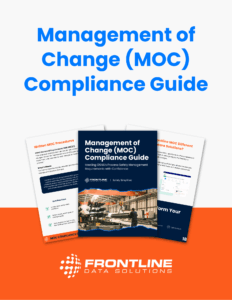
Free MOC Compliance Guide to Help You Get Started
Download our MOC Compliance Guide, which breaks down OSHA’s management of change requirements in greater detail. This guide will help you understand what’s required to meet compliance and give you practical tips for improving your MOC program.
Why Non-PSM Changes Deserve More Attention
Process safety management gives companies a clear framework for managing changes to covered processes. But operational risk exists outside of PSM because facilities constantly make changes to variables like equipment and technology. Some of these changes seem minor at first, which is exactly why they can become dangerous over time.
A non-PSM change is any operational, procedural, equipment, personnel, or system change that doesn’t fall under formal PSM requirements but still has the potential to affect safety, compliance, quality, production, or emergency response. While they don’t require a MOC review for compliance, they still require structured thinking.
The challenge is that non-PSM changes often move faster than formal processes. They happen during shift changes, maintenance windows, production pressures, staffing shortages, and emergency repairs. Without a simple change management process, teams rely on memory, judgment, and informal communication. That may work for low-risk decisions, but it leaves too much room for missed hazards when the change affects actual work.
Temporary Changes and Workarounds
Temporary changes are a common cause of unmanaged risk because they rarely feel permanent enough to justify a formal review. The problem with temporary changes is that they often go past their original intentions. A short-term workaround can become part of the system if no one enforces an expiration date, reviews the risk, or assigns ownership for restoring the original condition. Workers may start to accept the workaround as standard practice, even though no one ever fully evaluated it.
Temporary changes can also create confusion between shifts or departments. For example, one crew might change a piece of equipment without informing another crew. Maintenance may think operations has accepted the risk, or operations may assume maintenance will restore the system soon.
These types of gaps often affect safeguards. And while each decision might have a valid reason behind it, each one can affect exposure, ergonomics, traffic flow, emergency access, or hazard recognition.
The safest way to manage temporary changes is to treat them as controlled deviations. Teams should define:
- Why the change is needed
- How long it will last
- What hazards it introduces
- What controls will remain in place
- Who owns the follow-up
- What conditions require the team to stop work or escalate the issue
This process doesn’t need to create unnecessary paperwork, but it should create accountability.
Procedural Changes
Procedural changes can create incidents when the written process, actual work practice, and employee training fall out of alignment. This is especially common when teams change a procedure so it’s more efficient but they don’t evaluate how it will affect hazard controls.
Some examples of procedural changes include:
- Adding a new step
- Removing a verification point
- Adjusting an inspection frequency
- Changing lockout requirements
- Updating cleaning methods
- Revising PPE requirements
- Modifying how workers document completion
Even small updates can change the way employees use equipment, handle materials, or approach energy sources, vehicles, or hazardous work areas.
Informal procedural changes increase the risk of incidents. This happens when, for example, a supervisor tells a team to “do it this way from now on” before anyone updates the official document. Over time, the official procedure becomes less useful because it no longer reflects how work happens in the field.
It’s also important to remember the sending a revised procedure document doesn’t count as good communication. Employees need to understand what changed, why it changed, what hazards the change affects, and what they should do differently. This matters even more when the procedure affects high-risk work such as confined space entry, hot work, line breaking, lockout/tagout, chemical handling, etc.
Staffing and Personnel Changes
Personnel changes often receive less attention than equipment or process changes, but they can have a major impact on safety performance. Staffing levels, experience, supervision, job assignments, and turnover all affect how well teams recognize hazards and follow controls.
Examples of staffing changes include:
- Moving employees to a different line
- Adding temporary workers
- Assigning newer employees to unfamiliar tasks
- Changing supervision
- Altering shift structure
- Reducing headcount
- Relying on overtime to cover demand
These decisions don’t change the physical process, but they change the people responsible for operating it safely.
Loss of institutional knowledge is one of the biggest issues with staffing changes. When tenured workers leave, there’s a gap in the system if no one is trained to do the work they used to cover.
Another issue is miscommunication that happens when roles change. For example, workers may assume someone else completed a verification or updated a document. These assumptions create gaps in ownership, especially during abnormal operations or during peak season when production demands get heavier.
Workers might have general safety training but no task-specific experience for a changed assignment. This creates a dangerous mismatch between qualifications on paper and real-world readiness. Companies can reduce this risk by considering whether affected workers need refresher training, job shadowing, updated access permissions, new PPE, additional supervision, or a pre-task briefing before changing assignments.
Equipment Substitutions and Minor Modifications
Many workplace incidents stem from small substitutions or changes that have unknown effects on performance, maintenance, access, or worker exposure. Examples include:
- Replacing a component with a similar part
- Changing a valve type
- Using a different hose or fitting
- Modifying a guard
- Moving a control panel
- Adjusting machine speed
- Changing a sensor location
- Altering ventilation
- Switching to a different tool
Just because the replacement part fits or the equipment continues to run doesn’t mean it’s necessarily safe. Substituted components or new tools can have vastly different chemical compatibilities, load ratings, durability characteristics, etc. They also create documentation problems. If teams don’t update drawings, training materials, etc., the facility slowly loses control of its own knowledge. Workers may troubleshoot issues or respond to incidents based on outdated information.
A practical change review should consider what the change affects, whether existing safeguards still apply, whether employees need new instructions, whether documentation needs updates, and whether any follow-up inspection should occur after implementation. This level of review helps prevent small technical decisions from becoming hidden safety gaps.
Contractor and Vendor Changes
Contractor-related changes can create risk because they add new people, processes, tools, and assumptions into the work environment. Even when contractors perform routine work, changes in contractor scope, crew composition, schedule, equipment, or work method can affect site safety.
For example, a contractor may bring different tools than expected or perform additional tasks beyond the original scope. These changes can affect:
- Permits
- Hazard communication
- Energy control
- Traffic flow
- Emergency access
- Coordination with operations
The risk often comes from expectation gaps. While the site team might assume a contractor understands hazards because they’ve worked together before, the contractor might assume that the facility has cleared the area of hazards. If neither side confirms their assumptions, the work may begin with incomplete hazard awareness.
When contractor work happens during normal operations, it creates even more hazards. The more people you have onsite, the harder it is to vet everyone. Plus, there are more bottlenecks in the way that can lead to trips, falls, and other safety accidents.
Managing contractors closely isn’t about slowing them down. In fact, proper management of contractor changes can increase productivity overall. The goal is to make sure everyone understands the current job even if it differs from the work order.
Layout, Traffic Flow, and Workspace Changes
Changes to the physical layout of a site can create immediate safety issues, especially in busy industrial environments where people, vehicles, materials, and equipment move through shared spaces. A layout change doesn’t necessarily alter the production process, but it can alter how workers navigate risk.
Common examples include:
- Moving storage racks
- Changing pedestrian walkways
- Relocating materials
- Adding temporary staging areas
- Adjusting forklift routes
- Changing parking or loading zones
- Moving emergency equipment
- Installing temporary barriers
- Rearranging workstations
These changes can affect visibility, line of sight, emergency access, ergonomics, housekeeping, fire protection, and vehicle-pedestrian interaction.
The danger is that layout changes often happen for practical reasons. Maybe teams need more storage or a project needs staging space. These are valid needs, but they can create new hazards if no one evaluates how the change affects the operation.
The best control is a simple field-level review before a layout change takes effect. Walk through the area, identify who uses the space, check emergency access, evaluate mobile equipment interactions, confirm signage needs, and communicate the change to affected employees. A layout change may look obvious to the team that made it, but it can surprise everyone else who works in or passes through that area.
Material, Chemical, or Product Changes
Material changes create hazards even when the process itself stays the same. New cleaning products, coatings, lubricants, etc., are often similar to the old ones. The important thing is to make sure that these substances don’t have different exposure, storage, compatibility, disposal, or emergency response requirements.
Chemical substitutions create especially important safety considerations. A replacement product may have different flammability, toxicity, reactivity, corrosivity, vapor pressure, odor threshold, or PPE requirements. Workers may assume the same handling practices apply because the material serves the same purpose. That assumption can lead to exposure, improper storage, incompatible mixing, or ineffective spill response.
Aside from chemicals, don’t forget about packaging changes. For example, a new dispensing method can affect splash or spill potential. It’s not a dramatic change, but they affect how people interact with materials during daily work.
Non-PSM changes to materials can also affect equipment and process conditions. They may require different ventilation, cleaning frequency, container labeling, or disposal practices or affect the condition of hoses, seals, gaskets, filters, or other components that come into contact with it.
Before introducing a new material, review safety data sheets, confirm labeling requirements, evaluate storage and compatibility, update hazard communication materials, verify PPE, and communicate the change to affected workers.
Software, Automation, and System Changes
Software and automation changes can create operational risk because they influence how people receive information, make decisions, and control work. These changes can affect operational variables like:
- Alarms
- Permissions
- Workflows
- Reporting
- Training assignments
- Maintenance schedules
- Production settings
- Emergency communication
One of the biggest risks of system changes is that you might not always know they’re coming. A good example of this is when you log into your safety software system and find that fields, buttons, alerts, reports, or workflows have changed without explanation. This can lead to missed approvals, incomplete documentation, delayed actions, or incorrect assumptions.
System changes should include user impact reviews answer these questions:
- Who relies on the system?
- What decisions does the system support?
- What workflows will change?
- What training or communication do employees need
- How does the company verify that the change worked as intended?
For safety-critical systems, figure out what you’ll do if you need to roll back any system changes and how you’ll test and monitor everything as well.
Production Demand and Scheduling Changes
Production pressure drives some of the riskiest non-PSM changes by impacting the pace, timing, and sequencing of work. When demand increases, teams may make changes like:
- Adding shifts
- Shortening changeovers
- Deferring maintenance
- Running equipment longer
- Adjusting staffing
- Speeding up processes
- Compressing downtime
These decisions can create risk even when no physical process changes occur.
For example, extended shifts or overtime may increase the chance of errors while faster changeovers reduce time for verification. Production changes also affect communication. When teams rush, they tend to skip pre-shift briefings or delay documentation. These shortcuts may seem necessary in the moment, but they reduce the company’s ability to recognize changing risk conditions.
Another common problem is deferred work (e.g., postponed repairs or inspections). When product demands increase, teams fall behind on routine tasks that prevent incidents. Several delayed tasks over time can create the conditions for an accident.
Leaders should always ask whether a new schedule affects staffing levels, fatigue, maintenance windows, inspections, permit approvals, contractor coordination, emergency response, or training requirements. This helps them make informed tradeoffs instead of discovering the consequences after an incident.
Emergency Response and Safety System Changes
Any non-PSM changes to safety programs should go through the MOC process to ensure they don’t affect critical controls. This includes any changes to:
- Emergency response plans
- Safety equipment
- Inspection routes
- Alarm systems
- Evacuation routes
- Muster points
- Spill kits and eyewash stations
- Fire protection equipment
These all require careful review because they affect how teams respond when something goes wrong.
These changes sometimes happen during facility projects, layout updates, maintenance work, or equipment upgrades. It’s important to remember that emergency controls only work when employees know where they are, how to use them, and what to do under stress.
The risk increases when emergency-related changes happen without proper communication. During an emergency, confusion costs time. Workers should not have to search for the nearest eyewash, guess which exit route remains open, or wonder whether an alarm means the same thing it meant last week.
Emergency response changes should trigger immediate communication, signage updates, temporary controls, and verification. If a safety system goes offline or moves temporarily, you should have measures in place to counteract the impact and communicate them before work continues. Also, don’t forget to confirm that contractors and visitors understand any changes that affect emergency response.
Free Download
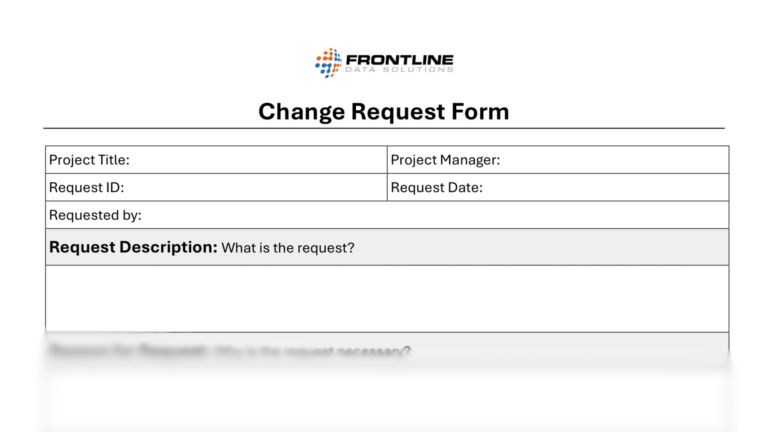
Download this free template to see what information to collect from change requests from your team.
Why Do Non-PSM Changes Slip Through the Cracks?
Non-PSM changes often cause problems when you don’t have a solid review process in place. If there’s no definition of what requires a review, then workers will skip MOC whenever possible. This is the case when considering smaller decisions over large capital projects, for example. Here are some common reasons why teams overlook or purposefully bypass MOC for non-PSM changes:
- The change feels too small to document.
- The change happens quickly during production pressure.
- The change belongs to one department but affects another.
- The change starts as temporary and becomes routine.
- The change happens through verbal instruction instead of a formal MOC request.
- The change affects people, behavior, or communication rather than equipment.
- The team assumes existing procedures and training still apply.
- No one owns follow-up after implementation.
The common issue is a lack of visibility. When changes happen informally, managers can’t evaluate risk across departments, shifts, and sites. And if the company doesn’t learn from the change or capture its impact, that makes it harder to prevent repeat issues.
You can reduce MOC process fatigue by creating a practical, risk-based process for non-PSM changes. Not every change needs the same level of review, but every potentially meaningful change needs a consistent way to identify hazards, assign ownership, communicate updates, and verify completion.
How to Manage Non-PSM Changes Without Overcomplicating the Process
A strong change management process should make it easier for employees to raise concerns, not harder. The goal is to create enough structure to catch risk without turning every decision into a long approval cycle.
The first step is to define what types of non-PSM changes require review. This helps employees recognize when to use the process. Examples may include equipment modifications, temporary workarounds, procedure changes, staffing changes, etc., that affect safety-critical tasks.
The second step is to use simple screening questions. These questions help teams determine whether the change introduces new hazards or affects existing controls. For example:
- Does this change affect how employees perform a task?
- Does it change equipment, tools, materials, or chemicals?
- Does it affect safeguards, alarms, inspections, or emergency controls?
- Does it change who performs the work or who supervises it?
- Does it affect contractors, visitors, or other departments?
- Does it require procedure, training, signage, or documentation updates?
- Does it create a temporary condition that needs an expiration date?
The third step is to route the change to the right people for review. A staffing change may need input from supervisors and training coordinators while a material change should go through safety, environmental, operations, and purchasing.
The fourth step is to document decisions and follow-up actions. A review has limited value if you don’t track what needs to happen next. Assign owners for procedure updates, training, inspections, communication, signage, system updates, and post-change verification. This ensures the change doesn’t stall after approval.
The final step is to close the loop after implementation. Confirm that the change happened as approved, employees understand the update, documentation reflects the new condition, and no unexpected risks have appeared. This step is especially important for temporary changes by preventing them from becoming permanent by default.
Using Frontline MOC to Control Non-PSM Changes
Frontline MOC software is a great tool for applying structured MOC beyond PSM boundaries. Instead of relying on email chains, spreadsheets, etc., teams can use a digital workflow to evaluate, approve, implement, and verify operational changes.
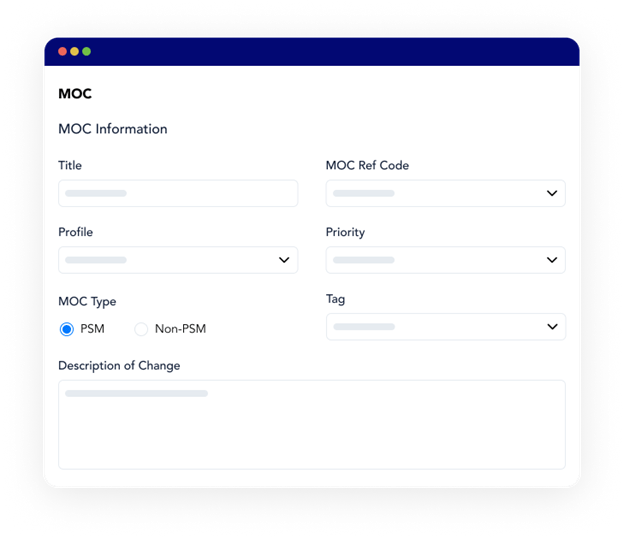
For non-PSM changes, this structure is especially valuable because it helps find hidden risk in routine work. Frontline MOC gives teams a consistent way to:
- Capture change requests and route them to the right reviewers
- Document risk evaluations
- Assign action items
- Maintain a clear record of what changed
That makes it easier for safety, operations, maintenance, engineering, and leadership teams to stay aligned.
The software also allows you to distinguish between PSM and non-PSM changes for easier reporting. If there’s a regulatory audit, you can easily build reports of just the covered changes your team has made. Detailed records allow you to better investigate incidents and plan future projects.
Book a demo to learn how Frontline MOC can help you manage non-PSM changes while simplifying your process and improving documentation.