

Written By:
Tiffany Gurary
Tiffany is an EHS professional with 15 years of experience supporting chemical manufacturing, research and development, pilot operations, and multi-site industrial environments.
Summary
Mobile and contractor operations introduce safety risks that are easy to underestimate. That’s because these risks tend to form outside the normal visibility of site-based safety programs. The changing conditions that field workers experience don’t always fit neatly into standard safety procedures.
Field-related safety risks often come from issues like poor communication gaps, changing work environments, and weak handoffs between internal teams and third parties. To effectively manage mobile and contractor operations, companies need structured processes for pre-job planning, contractor qualification, site orientation, work authorization, hazard communication, documentation, and corrective action follow-up.
Key Takeaways
- Mobile and contractor operations create hidden safety risks because the work often happens outside a fixed, controlled environment.
- Risk increases when contractors or mobile workers experience changing site conditions, unfamiliar hazards, or unclear expectations.
- Safety gaps often appear during handoffs between operations, maintenance, EHS, procurement, supervisors, and contractor teams.
- Contractor prequalification, onboarding, training verification, and work permits establish expectations before work begins.
- Mobile work requires strong communication because crews might not have immediate access to supervisors or other site resources.
- EHS software centralizes contractor documentation, standardizes mobile work processes, and improves safety visibility across locations.
The Risks of Mobile and Contractor Operations
Safety programs tend to work best when managers can control all the variables (facility, workers, equipment, routine, etc.). A fixed environment gives safety leaders a defined space to inspect, document, train, and improve. This isn’t the case with mobile and contractor operations are different.
This type of work can happen across multiple locations that change from day to day. The people doing the work may include internal employees, contractors, or field workers (e.g., technicians or drivers). While some might know the company’s safety policies, others might not. That creates a visibility problem in the safety program.
Having strong internal policies with limited insight creates a category of risk that doesn’t always exist clearly in traditional safety planning. These risks typically happen in situations like these:
- A contractor arrives before the work area is ready.
- A mobile worker follows a standard procedure that doesn’t fit the actual job site.
- A supervisor assumes that another department verified contractor training.
- A temporary change in the work scope never gets reviewed for safety impact.
- A field crew can’t access the latest procedure or permit.
- A subcontractor doesn’t receive the same orientation as the primary contractor.
While each gap may seem minor on its own, together, they can create serious safety risks.
Why are Field Operations Different from Site-Based Work?
Mobile and contractor operations cover a broad range of work arrangements. Here are some examples:
- Field service team
- Mobile maintenance crews
- Utility work
- Construction support
- Contractor-managed projects
- Vendor service work
- Off-site deliveries
- Turnaround support
- Temporary labor
- Work performed at customer locations
These activities share involve less direct control than traditional site-based work.
In a controlled facility, safety leaders rely on things like signage and fixed equipment to build safe work conditions. In mobile and contractor operations, these resources aren’t available.
Workers may work at multiple sites in a single shift. This means field operations have different expectations for safe work than fixed ones. Mobile workers and contractors may encounter changing hazards throughout the day. Supervisors might manage people they don’t know well or have safety documentation scattered across multiple systems.
This creates complexity in several areas:
- Who confirms that the worker is qualified?
- Who communicates site-specific hazards?
- Who approves the work?
- Who verifies training?
- Who owns the permit or job hazard analysis?
- Who has the authority to stop work?
- Who documents incidents, near misses, or corrective actions?
- Who follows up after the work is complete?
Safety risk increases when there aren’t clear answers to these questions.
Hidden Risk #1: Inconsistent Contractor Qualification
Contractor safety starts before anyone arrives on site. Most companies, though, treat contractor qualification as an admin task more than an important step for reducing safety risks.
During the approval process, contractors submit documents like proof of insurance or permits. These records are important but they don’t automatically prove that the workers assigned to the jobsite understand the hazards. This becomes an issue when you only look at the contracting company’s qualifications and not the individual workers.
Common contractor qualification risks include:
- Expired insurance or compliance documents
- Missing licenses, certifications, or trade qualifications
- Incomplete safety program documentation
- Poor review of past incident history
- Lack of verification for subcontractors
- No consistent process for approving high-risk work
- No centralized record of contractor status
This risk is harder to manage when locations use different approval processes. One site may require detailed documentation while another relies on informal approval.
A stronger process sets clear qualification requirements based on the type of work performed. In other words, low-risk vendors typically need a lighter review while contractors performing high-risk work (confined spaces, hot work, etc.) should go through a more rigorous approval process. The goal is to make sure the contractor’s safety practices match the risk of the work.
Hidden Risk #2: Weak Site Orientation and Onboarding
Without effective contractor onboarding, workers understand their own company’s safety rules but still miss the hazards, emergency procedures, and operational expectations of the host site.
This is especially important for contractors who perform work across multiple locations. They’re familiar with the task itself but unfamiliar with the facility layout, traffic flow, chemical hazards, restricted areas, evacuation routes, reporting procedures, or communication expectations.
A weak orientation process can leave contractors asking:
- Where are they allowed to work?
- Which areas require special authorization?
- How should they report hazards, injuries, near misses, or property damage?
- Who is their site contact?
- What PPE do they need for specific areas?
- What should they do during an emergency?
- Which permits apply to the job?
- How do they request approval for scope changes?
- When do they have the authority to stop work?
The biggest issue is often consistency. Some contractors receive full orientation while others receive quick walkthroughs. Some watch a training video but never confirm comprehension, and others sign a document without meaningful discussion.
A more reliable onboarding process should be well-documented, repeatable, and tied to the work. Contractors should always understand the specific risks associated with the location, job scope, and conditions onsite.
Hidden Risk #3: Changing Work Conditions
In mobile and contractor operations, conditions can change quickly, and those changes can make a previously safe task more hazardous.
For example, a mobile maintenance crew may plan for routine service, then find different equipment conditions than expected. These changes create risk because the original plan may no longer match the actual work environment.
Changing conditions may include:
- Weather changes
- Equipment status changes
- New vehicle or pedestrian traffic
- Changes in chemical, energy, or material exposure
- Unplanned production activity
- Different site access conditions
- Temporary barricades or obstructions
- New hazards introduced by another contractor
- Scope changes requested during the job
Changes create risk when no one pauses to reassess them. This is where pre-job planning, job safety analyses, permits, and management of change processes become especially important. Workers and contractors need a clear expectation that changes in work conditions require a reassessment before the job continues.
A simple question can prevent a serious incident: “Is the work still the same as what we approved?”
If the answer is no, the process requires a pause, review, and documented approval before work resumes.
Hidden Risk #4: Poor Communication Between Teams
Mobile and contractor operations often involve multiple groups that don’t communicate directly with each other every day. While operations requests the work, maintenance independently coordinates the schedule. Each group owns one part of the process, but no single group sees the full risk picture, creating room for assumptions.
This can look like operations assuming that the maintenance team briefed a contractor or the EHS team assuming a supervisor confirmed required training. These communication gaps are especially dangerous during higher-risk activities, such as:
- Hot work or confined space entry
- Electrical work
- Working at heights
- Line breaking
- Equipment isolation
- Excavation
- Material handling
- Process equipment maintenance
- Temporary bypasses or workarounds
A strong communication process should make ownership visible. Everyone involved should know who approved the work, what hazards they identified, what controls are required, what conditions would stop the job, and how changes will be communicated.
Mobile and contractor operations need this sort of structured communication because informal updates are too easy to miss.
Hidden Risk #5: Training Gaps for Non-Employee Workers
Most companies have a solid internal safety training program for employees but a less consistent process for verifying contractor training. With contractors performing sensitive tasks, poor training increases safety risks.
Contractor training doesn’t always need to mirror employee training. But companies do need a way to confirm that contractors have the training required for their assigned tasks and the specific hazards of the site. This includes things like emergency response, lockout/tagout procedures, fall protection, and more.
A common mistake is relying too heavily on documentation without connecting it to the actual work. Just because a contractor provides proof of general training doesn’t mean their workers understand the site-specific hazards, job scope, equipment, or materials involved.
Training verification should answer two questions:
First, has the contractor completed the required training for the type of work?
Second, has the contractor received the site-specific information needed to work safely in this environment?
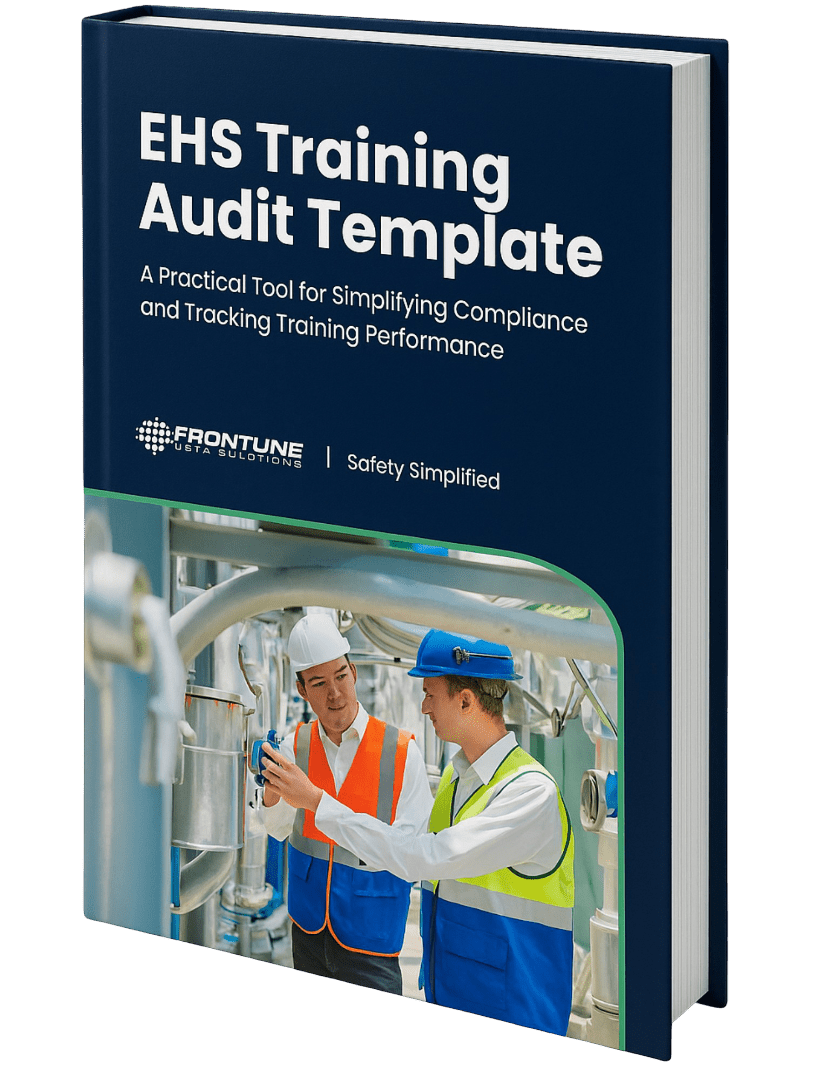
FREE Safety Training Audit Template
Download our EHS Training Audit Template, which provides step-by-step guidance for auditing your training program. With it you, can find new opportunities to improve processes and achieve better training outcomes for compliance.
Hidden Risk #6: Limited Visibility into Field Activity
Mobile work is difficult to manage because leaders can’t see the work while it happens. Field employees and contractors often make decisions in real time, away from direct supervision. It doesn’t mean they’re working unsafely. It just means that the safety system needs to support good decision-making when supervisors aren’t present.
Limited visibility can affect:
- Hazard reporting
- Inspection completion
- Permit status
- Corrective action follow-up
- Incident reporting
- Training records
- Equipment checks
- Work authorization
- Communication with supervisors
- Documentation quality
If field activity depends on paper forms, spreadsheets, etc., safety leaders might not know about problems until after the fact. A good example of this is when a safety inspection takes place but no one reviews the findings.
Visibility matters so field activity can inform decision making within the safety program. Without it, companies struggle to identify patterns across locations, crews, contractors, or job types.
A mobile-friendly safety process gives workers and supervisors a faster way to capture information, submit documentation, and escalate issues from the field.
Hidden Risk #7: Unclear Ownership of Contractor Safety
Contractor safety can fall into a gray area where contractors are responsible for their own employees, but hiring companies still need to manage the risks created by contractor activity on their sites. Without documentation of who’s in charge of what, this situation can get confusing quickly.
This is especially true when contractors work independently, bring subcontractors, or perform specialized tasks that internal teams don’t fully understand.
Unclear ownership may lead to questions like:
- Who verifies the contractor’s training?
- Who confirms the permit requirements?
- Who communicates site hazards?
- Who monitors the work?
- Who stops the job if conditions change?
- Who documents contractor incidents?
- Who follows up on corrective actions?
- Who reviews contractor performance after the job?
If no one owns these steps, they might not happen consistently.
A better approach is to define ownership for each stage of contract work. That includes prequalification, onboarding, work planning, job execution, monitoring, incident reporting, corrective action, and post-job evaluation. Ultimately, contractor safety works best when companies make it part of their standard work and not some separate compliance requirement.
Hidden Risk #8: Documentation That Lives in Too Many Places
Contract and mobile work generates a lot of documentation, including (but not limited to) prequalification records, insurance documents, training certificates, permits, JSAs, inspection forms, incident reports, corrective actions, work orders, and more.
That creates risk by making it harder to confirm what happened, who approved what, and what still needs follow-up.
Common documentation problems include:
- Contractor records stored in email inboxes
- Training certificates saved on individual computers
- Paper permits filed after the work is complete
- Inspection forms that never reach EHS
- Corrective actions tracked in spreadsheets
- Expired documents that no one flags
- Different sites using different versions of forms
- No clear audit trail for approvals
This becomes a major issue during audits, incident investigations, and contractor performance reviews. If you spend more time searching for documentation than analyzing what went wrong or how to improve, you’re missing out on major risks or opportunities.
Centralized documentation helps reduce this risk. It gives operations, EHS, maintenance, and contractor management teams the most up-to-date information on contractor status, work authorization, training records, and follow-up actions.
Hidden Risk #9: Temporary Work That Becomes Routine
Mobile and contractor operations often involve temporary work like short-term repairs or seasonal crews. Because the work is temporary, not everyone does the same level of review as they do for permanent changes.
But temporary can still be high-risk.
In many cases, temporary work creates more risk because it happens outside normal routines. Workers may use alternate equipment, temporary access points, portable tools, different materials, or nonstandard procedures. Meanwhile, contractors may perform work near active operations.
The danger increases when temporary changes become normalized.
That’s why temporary work should have clear boundaries:
- What is changing?
- Why is the change needed?
- Who approved it?
- How long will it last?
- What hazards does it introduce?
- What controls are required?
- Who needs to know?
- What triggers review or removal?
If temporary work affects equipment, procedures, staffing, materials, process conditions, or risk controls, you should evaluate whether a management of change process applies.
Hidden Risk #10: Weak Corrective Action Follow-Up
Incidents, near misses, audits, inspections, and contractor observations often generate corrective actions. But in mobile and contractor operations, follow-up can be difficult because people and work locations change quickly.
A contractor may finish the job and leave before an issue is fully reviewed. One example is that a supervisor assigns an action item verbally without documenting it. Weak corrective action follow-up allows issues like this to keep happening.
That’s why corrective actions need clear ownership, due dates, priority levels, documentation, and verification. If a contractor repeatedly fails to follow safety expectations, that history should influence whether you hire them in the future.
How To Reduce Risk in Mobile and Contractor Operations
Improving safety in mobile and contractor operations requires a connected process. You need to manage the people, work, documentation, communication, and follow-up together. Here are the elements that a strong process should include for long-term success.
Standardize Contractor Prequalification
Contractor prequalification should match the risk level of the work. Start by defining what information contractors must provide before you approve them and how often you’ll review that information.
Examples of information for approval include insurance documentation, written safety programs, trade certifications, licenses, and more.
High-risk contractors should receive a more detailed review than low-risk vendors. The process should also include renewal reminders, so expired documents do not go unnoticed.
Verify Training Before Work Begins
Training verification should always happen before you allow contractors on site or they begin work. This is especially important for tasks involving hazardous energy, confined spaces, hot work, elevated work, hazardous chemicals, powered equipment, or other high-risk exposures.
A strong training verification process should identify:
- Which training applies to each role
- Which workers have completed the required training
- Which records are expired or missing
- Whether site-specific orientation has been completed
- Whether subcontractors meet the same expectations
This reduces the chance that unqualified workers begin work prematurely due to scheduling pressures or unclear responsibility.
Use Job-Specific Hazard Reviews
Contractors and mobile workers need to know the job-specific hazards they’re facing. A job hazard analysis, pre-task plan, or field-level risk assessment can help them identify hazards before the job starts, especially when conditions change between locations.
A good hazard review should address the task itself and the work area. It should also look at potential safety risks related to:
- Nearby operations
- Tools and equipment
- Energy sources
- Chemical or environmental exposures
- Traffic and mobile equipment
- Weather or outdoor conditions
- Required PPE
- Emergency response steps
- Triggers for stopping work
A good review should create a practical conversation about what could go wrong and how workers can control risks.
Clarify Work Authorization and Permit Requirements
Mobile and contractor operations need clear rules for when work requires formal authorization. Contractors should know which tasks require permits, who can approve them, and when work must stop for another assessment.
Common permit-controlled activities include:
- Electrical or hot work
- Confined space entry
- Excavation
- Line breaking
- Working at heights
- Critical lifts
- Lockout/tagout activities
- Work in restricted areas
Connect your permit processes directly to the job conditions and make sure you review permits again if the project scope changes.
Define Stop-Work Authority
Knowing who has the authority to stop field work is especially important for mobile and contractor operations. Every worker onsite should understand that they can pause work when conditions appear unsafe, unclear, or different from what was approved. Contractors should receive the same message during onboarding.
Stop-work authority should apply when:
- The work scope changes.
- Conditions differ from the plan.
- Required controls are missing.
- A worker isn’t qualified for the task.
- Equipment appears unsafe.
- A permit is missing, expired, or inaccurate.
- A new hazard appears.
- Communication breaks down.
Companies should also reinforce that stopping work to reassess a hazard is a sign of a strong safety culture, not a failure to perform.
Improve Communication Across Departments
Contractor and mobile work often crosses departmental boundaries, so your safety process needs to support cross-functional communication.
Operations, EHS, maintenance, procurement, supervisors, and contractor coordinators should share a common understanding of the process. Each group should know its role and where to find the information it needs.
Clear communication should answer:
- Who requested the work?
- Who approved the contractor?
- Who verified training?
- Who completed the orientation?
- Who reviewed the hazards?
- Who authorized the work?
- Who monitors the job?
- Who documents any issues?
- Who follows up after completion?
When these roles are clear, you’ll spend less time relying on assumptions.
Track Corrective Actions Through Completion
A corrective action process should make follow-up visible. This is especially important when mobile workers and contractors move between jobs quickly.
Each corrective action should include:
- A clear description of the issue
- An assigned owner
- A due date
- A priority level
- Supporting documentation
- Status updates
- Verification that the action was completed
- Review of whether the action solved the problem
For contractor-related issues, corrective actions should also connect to contractor performance history. That will help you identify recurring problems and make better decisions about which contractors to hire in the future.
Use EHS Software to Strengthen Field Work Safety
Manual processes make mobile and contractor operations harder to manage. Spreadsheets, email folders, paper forms, and shared drives can work for small teams, but they become unreliable as you expand your workforce or your operations get more complex.
Digital solutions like the Frontline EHS software suite bring structure and visibility to mobile and contractor operations.
For example, contractor safety management software can help teams:
- Centralize contractor records
- Track prequalification status
- Manage onboarding
- Verify training
- Document contractor performance
This gives operations and EHS teams a clearer picture of which contractors are approved, which records are current, and which requirements need attention before work begins.
Action tracking and incident management software can help teams capture field observations, incidents, near misses, audits, inspections, and corrective actions in one system. This reduces the risk that issues are buried in emails or spreadsheets after a job is complete.
Management of change software can help teams evaluate temporary or non-routine changes that affect operational risk. This is especially useful when mobile or contractor work introduces new procedures, materials, equipment conditions, or temporary controls.
And finally, learning management software can help standardize training and track completion across employees, supervisors, and contractors. This gives you a more reliable way to verify that workers have completed required training before they enter a site or perform high-risk work.
The biggest benefit is the connection between all areas of your safety program. Mobile and contractor operations create risk when there’s no single source of information. EHS software helps centralize that information, so you can make better decisions before, during, and after the work.
Book a demo to learn more about the benefits of Frontline EHS software for mobile and contractor operations.