

Written By:
Monica Kinsey
Monica is a former warehouse operations manager with a passion for workplace safety. Her favorite topics to cover include safety leadership and continuous improvement.
The purpose of a fire incident report is to document the details of a fire safety incident that has taken place in your facility. Not only does it serve as a record of the event, but this report also is a useful tool for investigating what happened.
Anyone reading this fire incident document should be able to understand the circumstances that led to the fire and the outcomes of the incident. This understanding is crucial when preparing a thorough fire incident report.
Depending on your industry, your requirements for handling fire-related incidents may vary. Below are my top recommendations for what to include in your site’s incident reporting documents, regardless of what your daily operations look like. Always remember to tailor your fire incident report to meet specific needs.
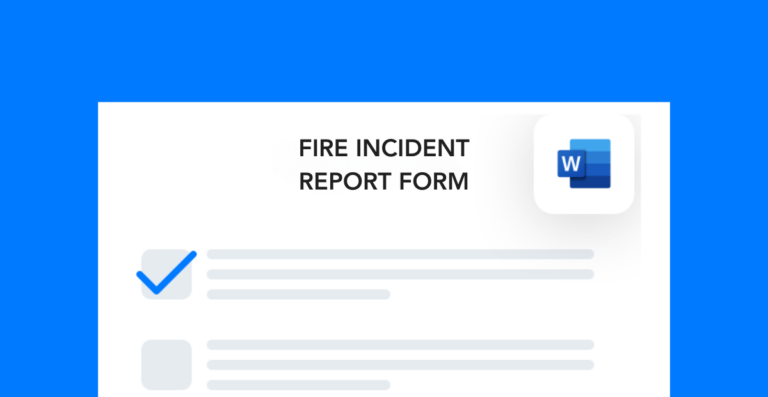
Free form!
Use this form to report all the fire safety incidents that happen onsite, ensuring that each incident has a comprehensive fire incident report.
Fire incident report details
Start by providing the basic information about what happened. Details to put in this section of your report include:
- Date, site location, and time of the incident
- Specific location within the facility where the incident occurred
- Extenuating factors (weather, third-party activities, etc.)
These details are especially important for revisiting the incident at a future time. Make sure you double check that all the information for this section is accurate before moving on to the next steps.
Aftermath and outcomes
In addition to the basic incident details, you’ll also want to include information about the immediate aftermath. This fire incident analysis includes things like:
- Was there any property damage?
- Did you notify and/or receive services from the local fire department?
- Were there any injuries or fatalities?
It’s important to note that if you did record any injuries or fatalities, those must be reported to according to OSHA’s recordkeeping requirements.
The incident report is a separate document and should not serve as the primary documentation of fire-related injuries but should complement the comprehensive fire incident report.
Fire incident description
The bulk of your fire incident documentation should be the description of what happened. This section is (in most cases) the most time-consuming part of the process. To write a comprehensive description, you’ll need to:
- Interview witnesses to gather the details.
- Investigate the scene to find evidence.
- Review video footage (if available) to gain additional context.
- Walk through the process(es) involved to determine the hazards that contributed.
During this process, record everything you uncover for a detailed fire incident report. Your report should almost always include attachments like photos, videos, and witness statements to provide a full picture of the event.
Optional information
How many sections you include in your fire incident report heavily depends on your site’s recordkeeping practices. For example, some companies require managers to complete a full root cause analysis. In that case, it wouldn’t be necessary to put all those details within the main incident report.
Here are some pieces of optional information you may want to include in your report, depending on the other requirements your site has in place:
- 5 why analysis
- Root cause investigation notes and conclusions
- Corrective actions (description, owner, due date)
- Investigation findings and recommendations
- Law enforcement documentation/communications (if applicable)
Remember, the primary goal of the report is to provide information regarding the details of the event. All incidents should have sufficient follow-up to determine the source and to eliminate hazards. Therefore, ensuring that the fire incident report contains all necessary information is crucial.
If your reports simply provide the description and details, you’ve done enough to document the fire incident. However, if you want to implement solutions after the event, you’ll definitely need to complete a thorough analysis using other methods like hazard assessments and the 5 whys.


![[Webinar] From Slogan to Proof: Making "Safety is Our #1 priority" True Across Teams](https://www.fldata.com/wp-content/uploads/2026/07/August-EHS-Today-Webinar-Promo-Images-768x432.png)